kunstmatige intelligentie
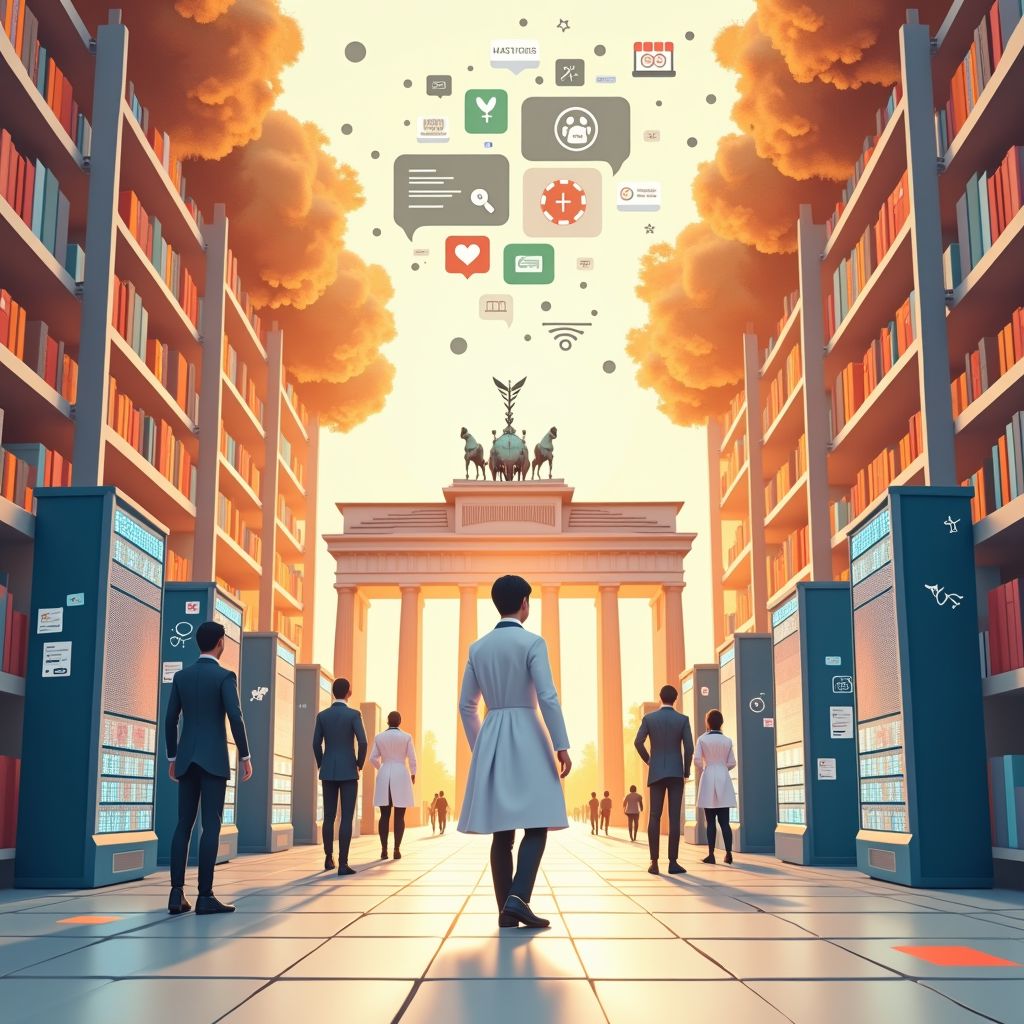
How Germany Is On the Brink of Gaining an AI Advantage
Berlijn, maandag, 17 november 2025.
Germany is on the verge of a profound economic transformation, where artificial intelligence is no longer a distant vision but a daily reality. One of the most striking developments: Google is investing €5.5 billion in German data centres and AI infrastructure, with direct impacts on employment and productivity. At the same time, Berlin is opening a new AI institute for medicine, led by a leading scientist. The government aims to invest €18 billion in AI by 2030, while 1.2 million jobs will transform within the next decade. The real catalyst? A powerful combination of public ambition, major private investment, and an unprecedented focus on education. What this means for your future, read on.
Comment l'Allemagne est sur le point de prendre une avance en matière d'intelligence artificielle
Berlijn, maandag, 17 november 2025.
L’Allemagne est à la veille d’une transformation économique profonde, où l’intelligence artificielle n’est plus une vision de l’avenir, mais une réalité quotidienne. L’un des faits les plus saisissants : Google investit 5,5 milliards d’euros dans les centres de données et l’infrastructure d’IA allemands, avec un impact direct sur l’emploi et la productivité. Parallèlement, Berlin ouvre un nouvel institut d’IA dédié à la médecine, sous la direction d’une scientifique de renom. Le gouvernement vise un investissement de 18 milliards d’euros dans l’IA d’ici 2030, tandis que 1,2 million d’emplois devraient évoluer en dix ans. Le véritable moteur de cette transformation ? Une combinaison de volonté publique, d’investissements privés importants et d’une attention sans précédent portée à la formation. Ce que cela implique pour votre avenir, vous le découvrirez ici.
Hoe Duitsland op het punt staat AI-voorsprong te nemen
Berlijn, maandag, 17 november 2025.
Duitsland is op het punt van een diepe economische transformatie, waarbij kunstmatige intelligentie niet langer een toekomstvisie is, maar een dagelijkse realiteit. Een van de meest opvallende feiten: Google investeert 5,5 miljard euro in Duitse datacenters en AI-infrastructuren, met een directe impact op banen en productiviteit. Tegelijkertijd wordt in Berlijn een nieuw AI-instituut voor de geneeskunde geopend, onder leiding van een toonaangevende wetenschapper. De overheid streeft naar 18 miljard euro investering in AI tot 2030, terwijl 1,2 miljoen banen binnen tien jaar zullen veranderen. De echte katalysator? Een combinatie van publieke ambitie, grote privé-investeringen en een ongekende focus op opleiding. Wat dit betekent voor jouw toekomst, lees je hier.

How AI Is Permanently Changing the Way We Find Information
amsterdam, vrijdag, 14 november 2025.
Imagine no longer having to scroll through search results, but instead receiving a precise answer instantly—and one that even knows its source. This is already a reality thanks to AI summaries from Google and other platforms. But there’s a profound twist: while users are finding information faster, traffic to websites is vanishing. In less than a year, the American news industry lost 600 million visitors—and a niche blog lost 86% of its revenue. Why? AI economies are transforming the information value chain. The largest players profit from data they don’t have to pay for, while smaller content providers lose income. What if you knew that Google processes 14 billion searches daily, while Perplexity and ChatGPT together handle only 57 million? Power is shifting—and the consequences affect everything from your trusted websites to the future of the web itself.
Comment l'IA transforme à jamais la manière dont nous trouvons des informations
amsterdam, vrijdag, 14 november 2025.
Imaginez que vous n’ayez plus besoin de défiler des résultats de recherche, mais que vous obtenez directement une réponse précise – et que cette réponse sache même d’où elle provient. C’est déjà une réalité grâce aux synthèses d’IA de Google et d’autres plateformes. Mais il y a une tournure inattendue : alors que les utilisateurs trouvent des informations plus rapidement, les flux de trafic vers les sites web s’effondrent. En moins d’un an, l’industrie américaine de l’actualité a perdu 600 millions de visiteurs – et un blog spécialisé a vu son chiffre d’affaires baisser de 86 %. La raison ? Les économies d’IA réinventent la chaîne de valeur de l’information. Les principaux acteurs profitent des données qu’ils n’ont pas à payer, tandis que les petits fournisseurs perdent leurs revenus. Et si vous saviez que Google traite chaque jour 14 milliards de requêtes de recherche, contre seulement 57 millions pour Perplexity et ChatGPT combinés ? Le pouvoir bascule – et cela a des conséquences sur tout, de vos sites préférés à l’avenir même du web lui-même.
Hoe AI de manier waarop we informatie vinden voorgoed verandert
amsterdam, vrijdag, 14 november 2025.
Stel je voor dat je geen zoekresultaten hoeft te scrolen, maar direct een precies antwoord krijgt – en dat het antwoord zelfs weet waar het vandaan komt. Dat is nu al realiteit dankzij AI-overzichten van Google en andere platforms. Maar er zit een ingrijpende twist in: terwijl gebruikers sneller informatie vinden, verdwijnen de verkeersstromen van websites. In minder dan een jaar verloor de Amerikaanse nieuwsindustrie 600 miljoen bezoekers – en een nicheblog verloor zelfs 86% van zijn omzet. De reden? AI-economieën veranderen de waardeketen van informatie. De grootste spelers profiteren van data die ze niet hoeven te betalen, terwijl kleinere aanbieders hun inkomen verliezen. Wat als je weet dat Google elke dag 14 miljard zoekopdrachten verwerkt, terwijl Perplexity en ChatGPT samen maar 57 miljoen doen? De balans van macht verspringt – en dat heeft gevolgen voor alles van jouw vertrouwde websites tot de toekomst van het web zelf.

How AI is Transforming the Digital Battlefield – and Why Speed Now Determines Everything
amsterdam, vrijdag, 14 november 2025.
Imagine a cyberattack that repairs itself, adapts in real time, and predicts how you’ll defend – all within milliseconds. Since last week, such autonomous, AI-driven attacks are no longer theoretical but a reality. In the Netherlands and the United States, over 1.2 million data records were intercepted by an AI-inspired attack on a national registry. What makes this so dangerous? The adversary no longer operates at human speed, but at machine speed. In response, defensive strategies must also become automated – without relinquishing human judgment. The future of digital security lies not in more people, but in intelligent, collaborative AI systems that combine speed, intelligence, and control. This is not science fiction: it is the new normal.
Comment l'IA transforme le champ de bataille numérique – et pourquoi la vitesse détermine désormais tout
amsterdam, vrijdag, 14 november 2025.
Imaginez : une attaque cybernétique capable de s’auto-réparer, de s’adapter et de prédire votre stratégie de défense – tout cela en quelques millisecondes. Depuis la semaine dernière, de telles attaques autonomes basées sur l’intelligence artificielle ne sont plus de la théorie, mais une réalité. Aux Pays-Bas et aux États-Unis, plus de 1,2 million de données ont déjà été compromises par une attaque inspirée de l’IA ciblant un registre national. Qu’est-ce qui rend cela si dangereux ? L’adversaire ne fonctionne plus à la vitesse humaine, mais à celle de la machine. En réponse, les stratégies de défense doivent elles aussi s’automatiser – sans pour autant céder le jugement humain. L’avenir de la cybersécurité ne réside pas dans davantage de personnel, mais dans des systèmes d’IA intelligents, collaboratifs et capables de combiner rapidité, intelligence et contrôle. Ce n’est pas de la science-fiction : c’est le nouveau normal.
Hoe AI het digitale slagveld verandert – en waarom snelheid nu alles bepaalt
amsterdam, vrijdag, 14 november 2025.
Stel je voor: een cyberaanval die zichzelf herstelt, aanpast en voorspelt hoe je je verdedigt – en dat allemaal in milliseconden. Sinds afgelopen week zijn zulke autonome AI-gebaseerde aanvallen niet langer theorie, maar realiteit. In Nederland en de VS werden al meer dan 1,2 miljoen gegevens onderschept door een AI-geïnspireerde aanval op een nationaal register. Wat maakt dit zo gevaarlijk? De tegenstander werkt niet meer op menselijke snelheid, maar op die van de machine. In reactie daarmee moeten verdedigingsstrategieën zichzelf ook automatiseren – zonder het menselijke oordeel uit handen te geven. De toekomst van digitale veiligheid ligt niet in meer mensen, maar in slimme, samenwerkende AI-systemen die snelheid, intelligentie en controle combineren. Dit is geen science fiction: het is het nieuwe normaal.

Why AI Is Not a Deity – And What That Means for You
Madrid, donderdag, 13 november 2025.
Ana Lazcano, director of the University Institute of Artificial Intelligence at the Francisco de Vitoria University in Madrid, warned on 12 November 2025 that artificial intelligence is not an omnipotent force, but a tool with limitations and risks. The most troubling reality? AI has created a spectacular technological gap between teachers and students, rendering written assignments often meaningless. She emphasises that critical thinking, ethical principles, and positioning AI as a supplement—not a replacement—are essential. This perspective is not a technical assertion, but a call for human responsibility in an era of rapid change—and a reminder that our wisdom remains irreplaceable.