journalistiek

How a fire in Hong Kong claimed 13 lives and what it reveals about urban safety
Hongkong, woensdag, 26 november 2025.
An enormous fire in a residential tower complex in Hong Kong, which claimed at least 13 lives, has drawn global attention. The blaze spread with astonishing speed across eight buildings containing a total of 2,000 apartments. The most shocking discovery: the fire did not start inside, but on the outer bamboo scaffolding used during renovation work. These traditional scaffolds, still widely used due to their lightweight and cost-effectiveness, are now the subject of a national safety debate. The tragic incident illustrates how hidden risks within urban infrastructure can escalate into disasters, underscoring the critical importance of early intervention and modern alternatives. This fire is not only a tragedy but also a warning to cities worldwide.
Comment un incendie à Hong Kong a coûté 13 vies et ce que cela révèle sur la sécurité urbaine
Hongkong, woensdag, 26 november 2025.
Un incendie dévastateur dans un complexe d’immeubles résidentiels à Hong Kong, qui a fait au moins 13 morts, a attiré l’attention mondiale. La flambée s’est propagée à une vitesse stupéfiante à travers huit bâtiments, regroupant au total 2000 appartements. La découverte la plus choquante : l’incendie n’a pas commencé à l’intérieur, mais sur les échafaudages extérieurs en bambou utilisés pendant des travaux de rénovation. Ces échafaudages traditionnels, encore largement utilisés en raison de leur légèreté et de leurs économies de coûts, sont désormais au cœur d’un débat national sur la sécurité. Cet événement tragique révèle comment des risques invisibles dans l’infrastructure urbaine peuvent se transformer en catastrophes, et souligne l’importance cruciale d’une surveillance précoce et de substituts modernes. Cet incendie n’est pas seulement une tragédie, mais aussi un avertissement pour les villes du monde entier.
Hoe een brand in Hongkong 13 levens kostte en wat dat zegt over stedelijke veiligheid
Hongkong, woensdag, 26 november 2025.
Een enorme brand in een woontorencomplex in Hongkong, waarbij zeker 13 mensen omkwamen, heeft wereldwijd aandacht getrokken. De vuurzee verspreidde zich met verbijsterende snelheid door acht gebouwen met in totaal 2000 appartementen. De meest schokkende ontdekking: de brand begon niet binnen, maar op de buitenste steigers van bamboe die werden gebruikt tijdens een renovatie. Deze traditionele steigers, nog steeds veelgebruikt vanwege hun lichtgewicht en kostenbesparing, zijn nu onderwerp van een nationaal veiligheidsdebatt. De tragische gebeurtenis laat zien hoe onzichtbare risico’s in stedelijke infrastructuur kunnen uitgroeien tot rampen, en waarom vroegtijdige controle en moderne substituten cruciaal zijn. Deze brand is niet alleen een drama, maar ook een waarschuwing voor steden overal ter wereld.

How 3 million jobs in the UK are at risk from AI – and what must happen now
Londen, woensdag, 26 november 2025.
By 2035, up to 3 million jobs in the United Kingdom could disappear due to the rise of artificial intelligence, particularly in sectors such as administration, logistics, and customer service. The most alarming fact? According to an analysis by the UK Office for Budget Responsibility, 40% of all current jobs in the UK will be affected by AI by 2035, with the greatest impact on low-skilled workers. While technology is advancing at breakneck speed, the skills gap is widening: only 39% of workers have access to AI training since 2023, despite 70% expressing a desire to receive it. The government and businesses are now responding with initiatives such as the AI Skills Passport, a free programme by EY and Microsoft designed to prepare young people worldwide for an AI-driven future. Yet pressing questions remain: is there sufficient time and coherence in policy to ensure both the economy and its people benefit?
Comment 3 millions d'emplois au Royaume-Uni sont menacés par l'IA – et ce qu'il faut faire maintenant
Londen, woensdag, 26 november 2025.
Au Royaume-Uni, près de 3 millions d’emplois pourraient disparaître d’ici 2035 en raison de l’essor de l’intelligence artificielle (IA), en particulier dans les secteurs de l’administration, de la logistique et du service client. Le fait le plus choquant ? Selon une analyse du UK Office for Budget Responsibility (OBR), 40 % de tous les emplois actuels seront touchés par l’IA d’ici 2035, avec un impact le plus marqué sur les travailleurs peu qualifiés. Alors que la technologie progresse à un rythme fulgurant, l’écart de formation s’agrandit : seulement 39 % des travailleurs ont eu accès à une formation en IA depuis 2023, bien que 70 % en aient exprimé le souhait. Le gouvernement et les entreprises réagissent désormais avec des initiatives telles que le AI Skills Passport, un programme gratuit développé par EY et Microsoft, destiné à préparer les jeunes du monde entier à un avenir dominé par l’IA. Mais des questions urgentes demeurent : existe-t-il suffisamment de temps et de cohérence dans les politiques publiques pour que l’économie et les citoyens puissent s’adapter et en tirer profit ?
Hoe 3 miljoen banen in het VK in gevaar zijn door AI – en wat er nu moet gebeuren
Londen, woensdag, 26 november 2025.
In het Verenigd Koninkrijk dreigen tegen 2035 ruim 3 miljoen banen te verdwijnen door de opkomst van kunstmatige intelligentie, vooral in sectoren als administratie, logistiek en klantenservice. Het meest schokkende feit? Volgens een analyse van het UK Office for Budget Responsibility zullen 40% van alle huidige banen in 2035 worden beïnvloed door AI, met de grootste impact op laaggeschoolde werknemers. Terwijl technologie razendsnel vooruitgaat, groeit de opleidingskloof: slechts 39% van de werknemers heeft sinds 2023 toegang tot AI-training, hoewel 70% dat wil. De overheid en bedrijven reageren nu met initiatieven zoals het AI Skills Passport, een gratis programma van EY en Microsoft dat jongeren wereldwijd voorbereidt op een AI-gedreven toekomst. Maar het dringende vraagtekens blijven: is er voldoende tijd en samenhang in het beleid om de economie én de mensen eraan te laten meewinnen?

Why AI Is Not an Enemy, But a Partner for Journalists
Nieuwspoort, dinsdag, 25 november 2025.
It is a common misconception that AI threatens journalism — but the truth is quite different. At the JOURN-AI 2025 event in Nieuwspoort, it became clear: AI has no will, no goals, and does not act consciously against journalists or the media. What stands out instead is that newsrooms often fail to invest sufficiently in knowledge and strategy, leaving them dependent on technologies they do not fully control. The real challenge is not using AI, but using it wisely — as a tool, not a replacement. The most striking conclusion? Human creativity, ethics, and transparency have never been more important, precisely because AI is so adept at mimicking them. The future of reliable news production does not depend on resisting AI, but on learning how to work with it — a matter of professionalism, not fear.
Pourquoi l'IA n'est pas un ennemi, mais un partenaire pour les journalistes
Nieuwspoort, dinsdag, 25 november 2025.
Il est fréquent de croire que l’intelligence artificielle menace la profession journalistique — mais la vérité est tout autre. Lors de l’événement JOURN-AI 2025 à Nieuwspoort, il est devenu clair que l’IA n’a pas de volonté, aucun objectif, et ne s’oppose pas aux journalistes. Ce qui émerge véritablement, c’est que les rédactions manquent souvent d’investissements dans la connaissance et la stratégie, ce qui les rend dépendantes de technologies qu’elles ne maîtrisent pas. Le véritable défi n’est pas l’utilisation de l’IA, mais la manière dont nous l’utilisons intelligemment — comme un outil, et non comme un substitut. La constatation la plus marquante ? La créativité humaine, l’éthique et la transparence sont jamais aussi importantes qu’aujourd’hui, précisément parce que l’IA sait si bien imiter. L’avenir d’une production d’information fiable ne dépend pas de la lutte contre l’IA, mais de la capacité à apprendre à travailler avec elle — une question de compétence, pas de peur.
Waarom AI geen vijand is, maar een partner voor journalisten
Nieuwspoort, dinsdag, 25 november 2025.
Het is een veelvoorkomend misverstand dat AI de journalistiek bedreigt — maar de waarheid ligt anders. Bij het JOURN-AI 2025-evenement in Nieuwspoort werd duidelijk: AI heeft geen wil, geen doelen, en werkt niet tegen journalisten. Wat wel op de voorgrond komt, is dat redacties zelf vaak tekortschieten in het investeren in kennis en strategie, waardoor ze afhankelijk blijven van technologie die ze niet beheersen. De echte uitdaging is niet het gebruik van AI, maar hoe we het verstandig inzetten — als gereedschap, niet als vervanger. De meest opvallende constatering? Menselijke creativiteit, ethiek en transparantie zijn nooit zo belangrijk geweest als nu, juist omdat AI zo goed kan mimiken. De toekomst van betrouwbare nieuwsproductie hangt niet af van het bestrijden van AI, maar van het leren om ermee te werken — en dat is een kwestie van vakmanschap, niet angst.
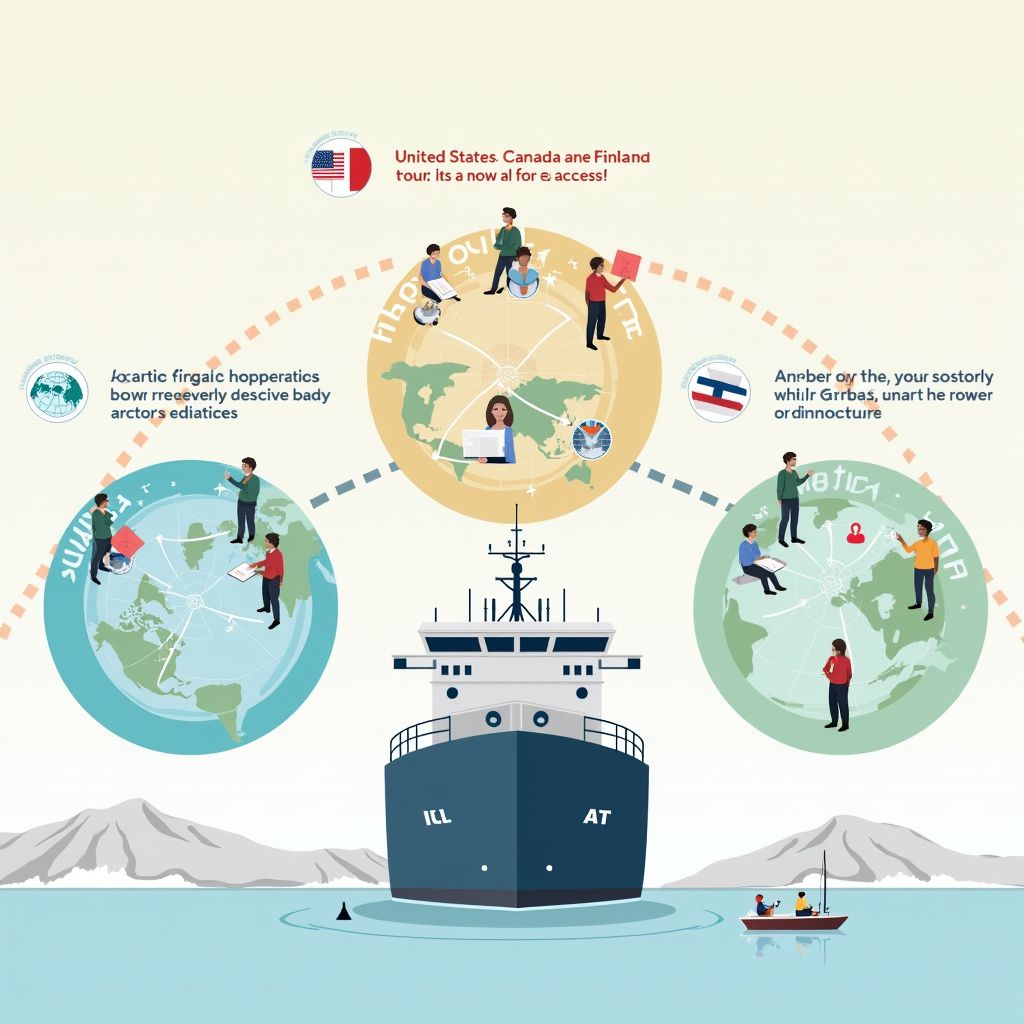
How Three Countries Are Jointly Shaping an Icebreaker Strategy for the Future
Ottawa, woensdag, 19 november 2025.
On 19 November 2025, the United States, Canada, and Finland announced a unique defence pact that places the Arctic region in a new strategic role. The so-called ICE Pact lays the foundation for the construction of eleven new icebreakers, four of which will be built in collaboration with Finland and Canada. The most striking development? Finland, a country not part of the Arctic Council, is taking on a formal security role in the region for the first time. This pact is not a traditional military alliance, but a technical and strategic collaboration aimed at securing access to northern waterways. It comes at a time when Russia and China are becoming increasingly active in the region, while the United States currently operates only two icebreakers. The cooperation also brings new job opportunities—through training American workers at Canadian and Finnish shipbuilding companies. It is a quiet yet powerful step in a world that increasingly views the Arctic as a zone of future security and economic value.
Comment trois pays forment ensemble une stratégie de brise-glace pour l'avenir
Ottawa, woensdag, 19 november 2025.
Le 19 novembre 2025, les États-Unis, le Canada et la Finlande ont annoncé un pacte de défense unique qui place la région arctique dans un rôle stratégique nouveau. Ce pacte, surnommé ICE Pact, établit les fondations d’un programme de construction de onze nouveaux brise-glaces, dont quatre seront réalisés en collaboration avec la Finlande et le Canada. Ce qui frappe le plus ? La Finlande, qui n’est pas membre du Conseil arctique, assume pour la première fois un rôle officiel de sécurité dans la région. Ce pacte n’est pas une alliance militaire au sens classique du terme, mais une coopération technique et stratégique visant à sécuriser l’accès aux passages nordiques. Il intervient au moment où la Russie et la Chine s’activent de plus en plus dans la région, alors que les États-Unis ne disposent actuellement que de deux brise-glaces. La collaboration crée également de nouveaux emplois, notamment grâce à la formation de travailleurs américains dans les chantiers navals canadiens et finlandais. Il s’agit d’une étape discrète mais puissante dans un monde qui voit de plus en plus l’Arctique comme une zone de sécurité et de valeur économique à venir.
Hoe drie landen samen een ijsbrekerstrategie vormen voor de toekomst
Ottawa, woensdag, 19 november 2025.
Op 19 november 2025 kondigden de Verenigde Staten, Canada en Finland een uniek verdedigingspact aan dat de Arctische regio in een nieuwe strategische rol plaatst. Het zogeheten ICE Pact legt de basis voor het bouwen van elf nieuwe ijsbrekers, waarvan vier in samenwerking met Finland en Canada. De meest opvallende ontwikkeling? Finland, dat niet tot de Arctische Raad behoort, neemt voor het eerst een formele veiligheidsrol in het gebied op. Dit pact is geen militaire alliantie in de klassieke zin, maar een technische en strategische samenwerking die de toegang tot de noordelijke passagen beveiligt. Het komt op het moment dat Rusland en China steeds actiever worden in het gebied, terwijl de Verenigde Staten slechts twee ijsbrekers hebben. De samenwerking brengt ook nieuwe banen met zich mee – via opleiding van Amerikaanse werknemers in Canadees en Finse werfbedrijven. Het is een stille, maar krachtige stap in een wereld die de Arctis steeds meer ziet als een gebied van toekomstige veiligheid en economische waarde.