nepnieuws
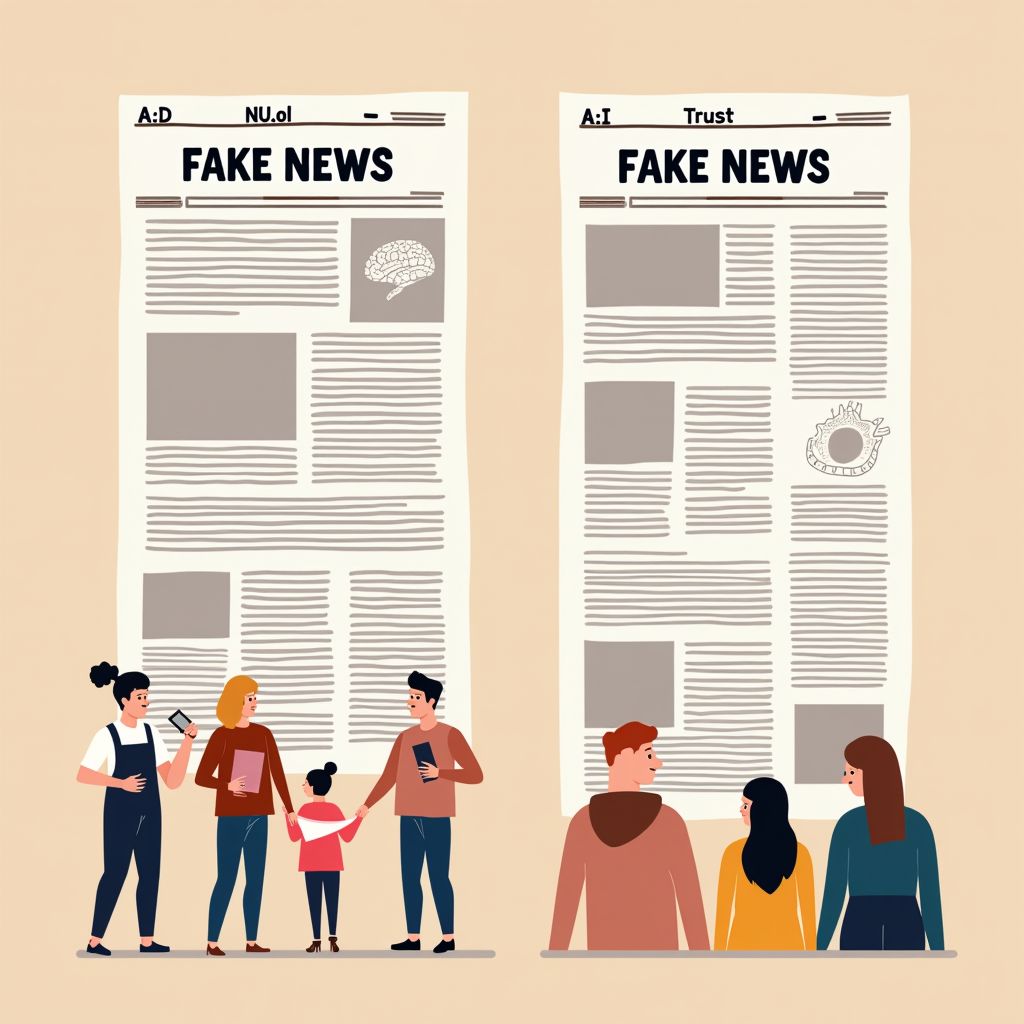
How Google Ads Mimic Fake News to Resemble Real Newspapers
Nederland, dinsdag, 9 december 2025.
Last week it became clear: fake news via Google ads looks so realistic compared to genuine articles from AD and NU.nl that many readers cannot distinguish it from the real thing. The technique behind these fabrications uses advanced AI not only to replicate text, but also layout and style. What is most alarming is that this method is being deployed at scale, particularly to mislead vulnerable groups. The risk is not just misinformation, but also a growing distrust in all media. The question arises: how can you know what you’re reading when even the format of a news article can no longer be trusted?
Comment les annonces Google imitent les fausses nouvelles au point de les confondre avec celles des vrais journaux
Nederland, dinsdag, 9 december 2025.
La semaine dernière, il est devenu évident : les fausses nouvelles diffusées par des annonces Google ressemblent tellement à des articles authentiques d’AD et de NU.nl que beaucoup de lecteurs ne parviennent pas à les distinguer. La technique derrière ces falsifications utilise une IA avancée pour imiter non seulement le texte, mais aussi la mise en page et le style. Ce qui est le plus inquiétant, c’est que cette méthode est utilisée à grande échelle, notamment pour tromper des groupes vulnérables. Le risque n’est pas seulement la diffusion d’informations erronées, mais aussi une méfiance croissante à l’égard de tous les médias. La question est : comment peut-on encore savoir ce qu’on lit, si même la forme d’un article d’actualité n’est plus fiable ?
Hoe Google-advertenties nepnieuws van de echte kranten nabootsen
Nederland, dinsdag, 9 december 2025.
Laatste week werd duidelijk: nepnieuws via Google-advertenties lijkt zo realistisch op echte artikelen van AD en NU.nl dat veel lezers het niet van de echte versie kunnen onderscheiden. De techniek achter deze vervalsingen maakt gebruik van geavanceerde AI om niet alleen tekst, maar ook opmaak en stijl te imiteren. Het meest verontrustende is dat deze aanpak op grote schaal wordt gebruikt, vooral om kwetsbare groepen te misleiden. Het risico is niet alleen misinformatie, maar ook een groeiend wantrouwen in alle media. De vraag is: hoe kun je nog weten wat je leest, als zelfs de vorm van een nieuwsartikel niet meer te vertrouwen is?

How an AI Dehaene Changed CD&V's Political Campaign
Brussel, maandag, 8 december 2025.
In an unexpected turn for political communication, CD&V has brought former Prime Minister Jean-Luc Dehaene back into the public debate—but this time through artificial intelligence. An AI-generated version of Dehaene, based on 43 hours of video and 12 hours of audio archive, delivers in a new campaign video: ‘The future is not a different politics—the future is a different way of living together’. Most striking? The technology reproduces Dehaene’s voice and gestures with such precision that even his iconic cowboy hat gesture appears authentic. Inspired by his legendary ride on a mechanical bull in Texas, the campaign is now also promoting an auction—where proceeds will go to De Warmste Week. But it also raises a crucial question: how do we still recognise what is real in an era of perfect digital imitation?
Comment une IA a transformé la campagne politique de CD&V
Brussel, maandag, 8 december 2025.
Dans une volte-face inattendue pour la communication politique, CD&V ramène l’ancien premier ministre Jean-Luc Dehaene dans le débat public – mais cette fois, grâce à l’intelligence artificielle. Une version générée par IA de Dehaene, fondée sur 43 heures de vidéos et 12 heures d’archivage audio, déclare dans une nouvelle vidéo de campagne : « L’avenir n’est pas une autre politique – l’avenir est une autre manière de vivre ensemble ». Ce qui frappe le plus ? La technologie a reproduit si fidèlement la voix et les gestes de Dehaene que même son geste caractéristique avec le chapeau de cow-boy semble réel. La campagne, inspirée de sa légendaire attaque sur un taureau mécanique au Texas, est désormais utilisée pour promouvoir une vente aux enchères – dont les recettes iront à De Warmste Week. Mais elle soulève aussi une question cruciale : comment reconnaître encore ce qui est réel dans une ère de simulations numériques parfaites ?
Hoe een AI-Dehaene de politieke campagne van CD&V veranderde
Brussel, maandag, 8 december 2025.
In een onverwachte wending voor politieke communicatie brengt CD&V voormalig premier Jean-Luc Dehaene terug in het publieke debat – maar dan via kunstmatige intelligentie. Een AI-gegenereerde versie van Dehaene, gebaseerd op 43 uur video en 12 uur audioarchief, zegt in een nieuwe campagnevideo: ‘De toekomst is niet een andere politiek – de toekomst is een andere manier van samenleven’. Het meest opvallende? De techniek heeft de stem en bewegingen van Dehaene zo nauwkeurig gereproduceerd dat zelfs zijn kenmerkende gebaar met de cowboyhoed lijkt echt. De campagne, geïnspireerd op zijn legendarische rit op een mechanische stier in Texas, wordt nu ook gebruikt om een veiling te promoten – waarbij de opbrengst gaat naar De Warmste Week. Maar het stelt ook een cruciale vraag: hoe herkennen we nog wat echt is in een tijd van perfecte digitale imitatie?

How a Silent War on TikTok Uses AI to Spread Racist Content
Amsterdam, donderdag, 4 december 2025.
TikTok is being overwhelmed by billions of views driven by automated bots that distribute AI-generated videos — including false images of young girls and racist fake interviews with migrants. According to a French study, more than half of these videos are not marked as fake, despite the platform having AI labeling tools. Most concerning? The majority of these bots were created only at the beginning of 2025, indicating a rapidly growing and barely regulated phenomenon. This development shows just how easily AI can now be misused to spread misinformation — without users even noticing. The question remains: how much longer will this go unnoticed?
Comment une guerre silencieuse sur TikTok utilise l'IA pour diffuser du contenu raciste
Amsterdam, donderdag, 4 december 2025.
TikTok est submergé par des milliards de vues attirées par des bots automatisés qui diffusent des vidéos générées par l’IA – incluant des images falsifiées de jeunes filles et des faux entretiens racistes avec des migrants. Selon une étude française, plus de la moitié de ces images ne sont pas marquées comme falsifiées, malgré la disponibilité de balises IA sur la plateforme. Ce qui est le plus inquiétant ? La majorité de ces bots ont été créés au début de 2025, ce qui révèle une expansion rapide et presque incontrôlée de ce phénomène. Cette évolution montre à quel point l’IA peut aujourd’hui être détournée pour propager de la désinformation, sans que les utilisateurs s’en rendent compte. La question est : combien de temps cela restera-t-il indétecté ?
Hoe een stille oorlog op TikTok AI gebruikt om racistische content te verspreiden
Amsterdam, donderdag, 4 december 2025.
TikTok wordt overspoeld door miljarden kijkers getrokken via automatische bots die AI-generatie filmpjes verspreiden – waaronder valse beelden van jonge meisjes en racistische nepinterviews met migranten. Volgens een Franse studie worden meer dan de helft van deze beelden niet als nep gemarkeerd, ondanks dat het platform over AI-labels beschikt. Het meest verontrustend? De meeste van deze bots zijn pas in het begin van 2025 aangemaakt, wat wijst op een snel groeiend en nauwelijks gecontroleerd fenomeen. Deze ontwikkeling laat zien hoe makkelijk AI nu misbruikt kan worden om misinformatie te verspreiden – zonder dat gebruikers het merken. De vraag is: hoe lang blijft dit onopgemerkt?

Why a pop star and a Shakespeare scholar help each other understand
Amsterdam, woensdag, 3 december 2025.
In an unexpected fusion of art and science, Professor Elly McCausland discovers that Taylor Swift’s songs share more in common with classical literature than most people realise. Her book ‘Swifterature’ demonstrates that Swift’s autobiographical narratives—rich in emotion and literary technique—are no different in depth from the works of Shakespeare, offering profound insights into the human experience. The most astonishing truth? What many dismiss as ‘superficial’ is, in fact, a rich source of introspection and social reflection. McCausland advocates for a broader definition of literature—one in which pop culture is treated with the same seriousness as a medieval epic. And perhaps that is precisely the point: to help people rediscover that stories, no matter how modern, are always about ourselves.