How a drone attacked a team of journalists in Ukraine – and why this is becoming a critical issue
Oekraïne, zondag, 9 november 2025.
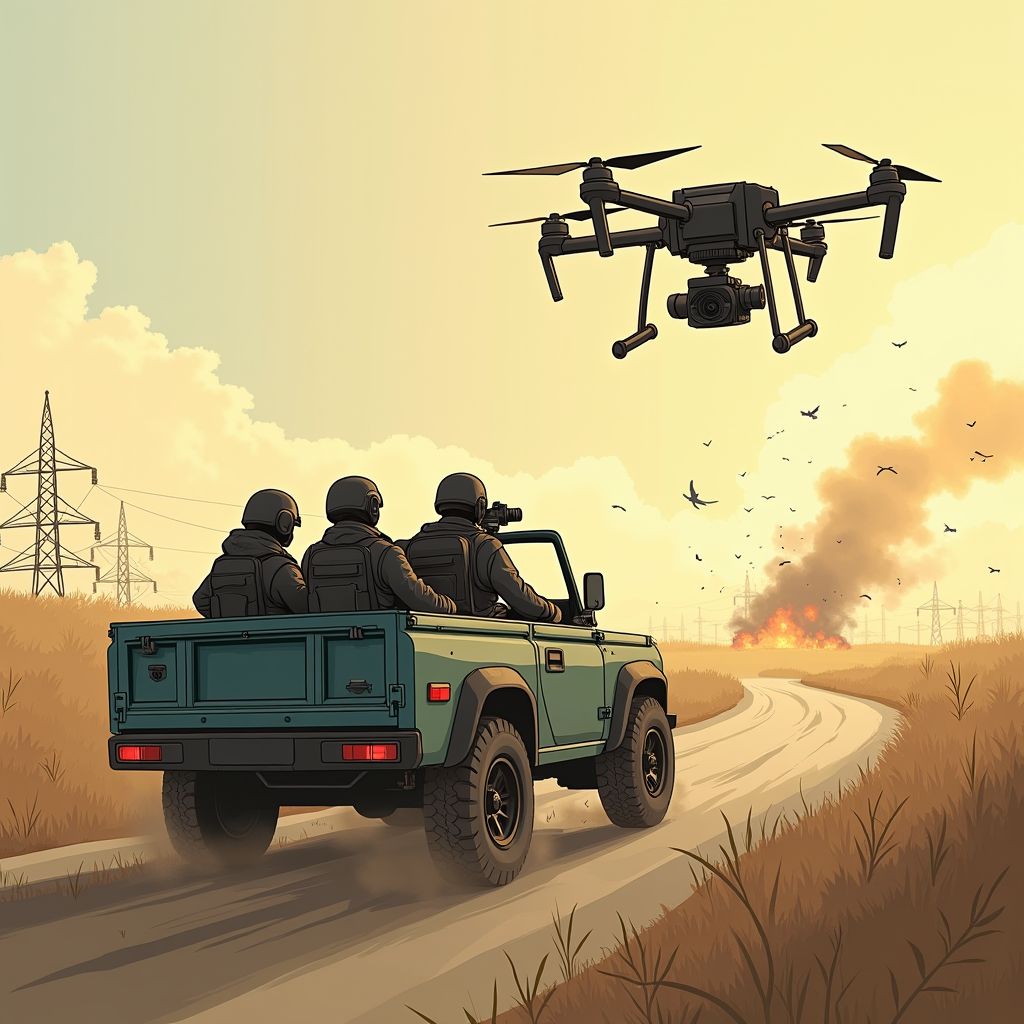
During a journey near the front line in Ukraine, a vehicle carrying European journalists was attacked by a drone. Although all passengers remained unharmed, the incident highlights the growing danger of non-traditional threats in war zones. The attack – reportedly carried out by a Russian drone, according to a journalist on social media – occurred while the group was travelling under escort. Most notably, the drone was fired directly at the vehicle, with the impact clearly visible in video footage. This event underscores a worrying trend: journalists, even when protected, are increasingly becoming targets of sophisticated attacks. In a period when energy infrastructure is being targeted and over 20,000 people remain without electricity, the safety of reporters has become a crucial benchmark for international engagement.
Attack on journalists in Ukraine: a drone as a weapon against reporters
On Sunday, 9 November 2025, a vehicle carrying European journalists was attacked by a drone in the eastern Donetsk region, near the town of Kostiantynivka, an area where the war has been ongoing for years. The incident occurred during a trip organised with the humanitarian organisation Proliska, under the escort of five security guards. The attack was carried out by a Russian drone, as reported by Austrian broadcaster ORF journalist Christian Wehrschütz, who shared video footage on social media showing the moment the drone collided head-on with the vehicle [1]. The impact was clearly visible: the bumper was torn off, smoke emerged, and burning debris remained visible in the footage [2]. All journalists, including Wehrschütz and a Spanish colleague, escaped unharmed, thanks to the driver spotting the drone in time and enabling the group to quickly exit the vehicle [2]. The event underscores the increasing dangers faced by journalists, even in areas where they are under protection, and highlights a clear trend: the use of drones as weapons targeting reporters in wartime [3].
The widespread use of drones in the war in Ukraine
The attack on the journalists was not an isolated incident, but part of a large-scale Russian offensive spanning the entire eastern front line. On Saturday, 8 November 2025, Russia launched over 450 drones and 45 missiles at Ukraine, with the aim of sabotaging energy infrastructure [2]. The attacks had devastating consequences: according to the state energy company Centerenergo, the Russian offensive brought electricity supply capacity ‘to zero’ [4]. In Russian regions including Belgorod, Kursk, and Voronezh, power plants were damaged or set on fire, leading to power outages for around 20,000 people in Russia [2]. In Ukraine itself, a drone strike in Dnipro killed three people and injured ten others; in Zaporizhzhia, one person died in another drone attack [2]. These events underscore that drones are not only used as weapons against military targets, but also as tools for large-scale sabotage and psychological pressure [3].
Journalist safety in war zones: from protection to unpredictability
The attack on journalists in Ukraine highlights the growing complexity of safety in war zones. Although the journalists were travelling under escort and had security personnel present, the vehicle still became a target of an advanced drone attack [2]. The fact that the drone was fired directly at the vehicle shows that attackers are no longer focusing solely on military objectives, but are increasingly targeting civilian groups, including the media [1]. Earlier in November 2025, the European Commission warned that Russia’s illegal war against Ukraine posed a ‘serious threat’ to journalist safety, with heightened risks of sabotage, disinformation, and drone incursions [2]. This warning is now reinforced by the incident in Kostiantynivka, which demonstrates that even with carefully planned journeys and protective measures, journalists are not safe [3].
International reactions and the future of media in conflict zones
The incident has drawn international attention and is pressuring media organisations to reassess their safety protocols. The Austrian broadcaster ORF, where Wehrschütz works, confirmed that their journalist was unharmed and that the event was thoroughly documented [1]. The incidents in Ukraine, combined with the large-scale use of drones, raise urgent questions about the future of journalism in conflict zones. Both Dutch media outlets and the Belgian government are now examining how journalists can be better protected, especially in high-risk areas [2][5]. In Belgium, there are also ongoing discussions about releasing blocked Russian assets held at Euroclear, with a focus on the financial and legal risks for the country [2]. While this does not directly affect journalists, it illustrates how international conflict policy is becoming increasingly complex, and with it, the safety of those bringing news to the public [2].