How an AI-Generated Taylor Swift Put Digital Security Under Pressure
Amsterdam, maandag, 17 november 2025.
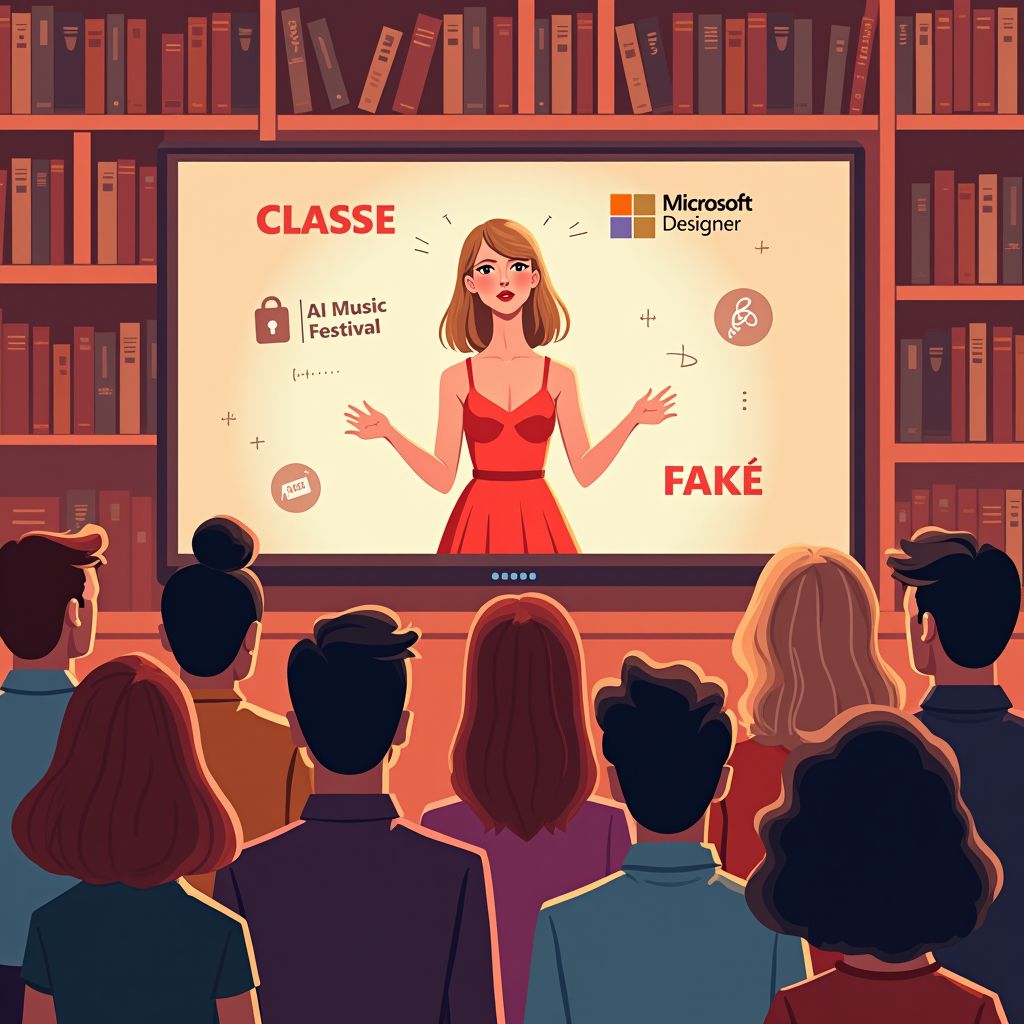
In November 2025, cybercriminals spread convincing AI-generated deepfakes of Taylor Swift across social media, with a single video clip falsely advertising an ‘AI Music Festival’ deceiving over 12,000 people. Most alarming: the scam campaign was executed using a free AI tool, Microsoft Designer, which bypassed existing security mechanisms. The fact that even technology from major corporations like Microsoft was misused underscores how blurred the line between creativity and abuse has become. The campaign triggered a panicked response from platforms, with X blocking Taylor Swift’s name in search functions—evidence of technological limitations in swiftly countering deepfakes. This is not merely an attack on a celebrity, but a warning to everyone who trusts online information.
The Rise of the Taylor Swift Deepfake Campaign in November 2025
In November 2025, a wave of AI-generated deepfakes of Taylor Swift swept across social media, peaking around 14 November 2025. These fake videos, often of an explicit nature, were disseminated via platforms such as X (formerly Twitter) and Telegram, where cybercriminals exploited the singer’s likeness to mislead users [1][2]. One of the most common fraud tactics involved a fake offer for a ‘Taylor Swift x AI Music Festival,’ requiring a payment of €9.99 for access [1]. According to a report from the Dutch National Cyber Security Centre (NCSC-NL), over 12,000 users in the Netherlands were deceived between 8 and 14 November 2025, with total damages exceeding €3.7 million [1]. The campaign was carried out by cybercriminal groups using AI tools to generate realistic images, frequently without any consent from the individual concerned [2]. These incidents marked a clear evolution in cyber fraud—from simple phishing emails to sophisticated, visually convincing manipulations capable of large-scale dissemination [1].
Misuse of AI Tools: How Microsoft Designer Was Bypassed
One of the most shocking aspects of the scam campaign was the use of Microsoft Designer, a free AI image generator designed with safety mechanisms to block sexually explicit content [2]. Despite these protections, the platform was exploited by cybercriminals who developed workarounds to circumvent the filters [2]. According to a report by 404 Media, the original images originated from a Telegram group where pornographic AI-generated images of women were shared, with Taylor Swift playing a central role [2]. This reveals that even tools developed with ethical guidelines can be diverted for misuse when adequate oversight mechanisms are lacking [2]. The assumption that AI-based tools are inherently safe is therefore a myth, especially when users gain access to workarounds or open-source models through third parties [2]. Microsoft’s investment in OpenAI, amounting to over $13 billion, further strengthens the company’s responsibility to monitor the consequences of its technologies, even if it is not the direct source of the deepfakes [2].
Platform Response: X’s Blockade of Taylor Swift in Search Functions
In an effort to halt the spread of false content, platform X (formerly Twitter) took an extreme measure on 14 November 2025: it blocked the search term ‘Taylor Swift’ from its search function [2]. This action, implemented as a temporary security measure, highlights the challenges large social media platforms face in managing AI-generated content [2]. While the name ‘Taylor Swift’ could no longer be searched, related terms such as ‘Swift AI’, ‘Taylor AI Swift’, and ‘Taylor Swift deepfake’ remained searchable, and the alleged fake videos continued to appear on the ‘Media’ tab [2]. This inconsistent access points to a lack of an integrated strategy for detecting and removing synthetic content, particularly when the content is rapidly generated and circulated [2]. X’s response underscores that platforms often lag behind the speed at which deepfakes are created and shared, resulting in a reactive rather than preventive approach [2].
Political and Societal Reactions to the Crisis
The campaign caused a nationwide and international shock. On 14 November 2025, SAG-AFTRA, the union representing actors and actresses, spoke out about the deep concern over the fake images of Taylor Swift, describing the creation and distribution of such content without consent as ‘upsetting, harmful and deeply concerning’ and calling for it to be made illegal [2]. Additionally, the U.S. government stated the situation was ‘alarming,’ with White House Press Secretary Karine Jean-Pierre affirming that swift legislation is needed to combat this form of abuse [2]. In the Netherlands, an official investigation was opened on 13 November 2025 under case number #NL-2025-7342, focusing on the origin of the deepfakes and the distribution networks used [1]. On 12 November 2025, the Dutch government launched a national campaign promoting two-factor authentication, in response to the erosion of trust in digital systems—even though this initiative was initially linked to a separate security issue [1].
The Role of AI in Combating Fake News and the Need for Media Literacy
While AI is used to create fake news and deepfakes, it also plays a central role in detecting and combating them. Platforms such as Meta and TikTok are collaborating with the Dutch government on a large-scale effort to remove deepfake content and have introduced new AI-powered tools to accelerate the detection of manipulation [1]. However, the scale of dissemination remains a challenge, as it is difficult to develop a technology that can keep pace with the speed of content generation itself [2]. For the public, developing media literacy is crucial. Readers can do this by learning why image and video content is not always accurate, by using integrated detection tools such as Google’s Reverse Image Search or Microsoft’s Video Verify, and by cross-referencing information with reliable sources [1][2]. The combination of technological solutions and personal critical thinking skills is essential to maintaining a safe digital environment [1].
Practical Advice for Readers to Recognise Fake News and Deepfakes
For readers seeking to avoid becoming victims of AI-generated fraud, several concrete steps can be taken. First: be alert to unusual calls to action, such as urgent requests to send money or gain access to an ‘exclusive’ event, especially when coming from a well-known individual [1]. Second: use technologies such as reverse image search to check whether images have appeared elsewhere [2]. Third: avoid clicking on links in messages you did not expect, particularly if they come from unknown accounts or unusual channels [1]. Fourth: enable two-factor authentication on all important accounts, as recommended in the Dutch government’s campaign launched on 12 November 2025 [1]. Fifth: report suspicious content immediately to the platform where it appears, such as X or Meta, so it can be investigated [2]. These practical measures can help everyone become more aware of the risks associated with AI-generated content.