How AI Could Divide the World – and What We Can Do About It
Hanoi, woensdag, 3 december 2025.
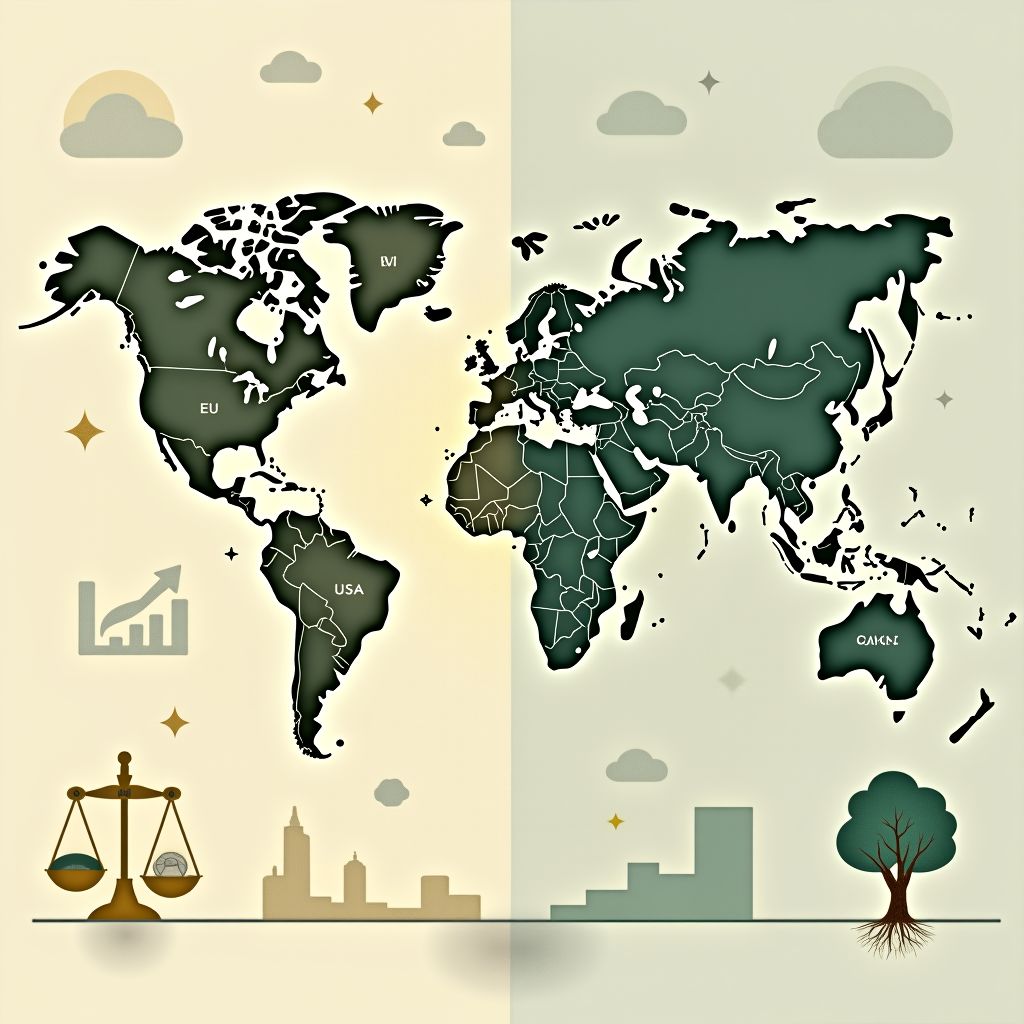
AI has the potential to widen global inequality, warns the UNDP based on a new report from Hanoi. The most striking finding? The gap between wealthy and poorer nations could deepen, as only a handful of countries have sufficient access to the technology, skills, and infrastructure needed to benefit from AI. While countries like Vietnam are actively building AI strategies, developing nations remain in the background. The opportunities are significant – such as a potential 2 percentage point boost in GDP growth across the Asia-Pacific region – but only if inclusive policies are implemented. The decision over who wins and who falls behind depends not on technology, but on the choices we make today.
AI as a Mirror of Global Inequality
The United Nations Development Programme (UNDP) warned on 2 December in Hanoi that artificial intelligence (AI) could widen the gap between rich and poor countries unless conscious policy choices are made. The report ‘The Next Great Divergence: Why AI May Widen Inequality Between Countries’ highlights that unequal access to digital infrastructure, education, investment capacity, and AI technology increases the risk of developing nations being left behind in the digital transition [2]. According to the UNDP, the rise of AI could usher in a new phase where economically emerging countries could fall further behind without active intervention [2]. The analysis shows that countries investing in skills, computing power, and effective governance systems are likely to benefit the most, while others face the risk of falling behind [1]. This is not a technical inevitability, but a policy choice that must be made now to ensure a more equitable future [2].
Opportunities and Risks in the Asia-Pacific Region
In the Asia-Pacific region, home to over 55% of the world’s population, the outlook for AI combines substantial opportunities with damaging inequality. The UNDP report states that AI could increase annual GDP growth in the region by approximately 2 percentage points and boost productivity in healthcare and finance by up to 5% [1]. The region hosts more than half of the world’s AI users and has a rapidly growing innovation footprint, ranging from China’s near 70% share of global AI patents to over 3,100 newly funded AI startups across six economies [1]. ASEAN economies could generate nearly one trillion dollars in GDP through AI over the next decade [1]. Nevertheless, the report warns that millions of jobs, particularly those held by women and youth, could be automated, and gaps in skills, data, and AI governance could limit the benefits of AI [1]. The divide is influenced by limited infrastructure, skills, computing power, and governance capacity, which constrain the potential advantages of AI [1].
Vietnam: A Model of Strategic Preparation
Vietnam demonstrates strong political commitment to digital transformation and AI application through policy and investment, as shown in the UNDP’s ‘Artificial Intelligence Landscape Assessment’ report in Vietnam [1]. The country has an ambitious national strategy to become a leading AI nation by 2030, aiming to rank among the top 3 in Southeast Asia and the top 50 globally in AI research and development [1]. This goal is a PLANS-2030 milestone yet to be achieved [1]. Vietnam has near-national 4G coverage, ongoing 5G rollout, and improved global rankings in e-government, supporting its digital infrastructure [1]. The UNDP stresses that inclusive policies, targeted investments, and responsible AI governance are essential to ensure AI becomes a tool for equitable development [1].
AI in Practice: From Government to Creativity
AI is already being deployed in various practical applications to enhance public services and information access. In Vietnam, an AI-powered support platform is being tested to provide citizens access to 15 essential online government services [1]. In Singapore, Moments of Life reduced paperwork for new parents from around 120 minutes to just 15 minutes [1]. In Bangkok, the Traffy Fondue platform processes nearly 600,000 citizen reports, enabling faster responses [1]. In Beijing, digital twins support urban planning and flood management [1]. In the cultural sector, the creative industry contributes approximately 3.1% to global GDP and generates over 30 million jobs [1]. AI is used to restore cultural heritage, such as the 3D digitisation of Notre-Dame after the 2019 fire and the restoration of Stephen Hawking’s voice through Project Revoice [1].
The Challenge of Inequality in the Creative Sector
The digital transformation of the cultural sector, accelerated since the COVID-19 pandemic, has brought new challenges related to copyright, ethics, and creative identity [1]. In 2023, the AI-generated track ‘Heart on My Sleeve’, which imitated the voices of Drake and The Weeknd, sparked global controversy and was removed from official platforms due to copyright infringement [1]. WIPO launched a global consultation process on AI-generated copyright in 2023, focusing on ownership of training data, AI-produced content, and moral rights [1]. The EU AI Act (2024) classifies AI systems by risk levels and requires content-generating AI systems to disclose the use of training data and label AI-generated content [1]. The US does not recognise AI as a legal author since 2024; AI-generated works without human creative input fall outside copyright protection [1]. Getty Images has sued Stability AI for training the Stable Diffusion model on millions of copyrighted images without permission [1].
AI in the Public Sphere: From Accessibility to Transparency
AI offers opportunities to make complex information accessible to diverse audiences, but requires careful implementation. AI systems used by platforms like Netflix, Spotify, and the Louvre Museum already employ algorithms to personalise cultural consumption and create AI-guided virtual tours based on authentic historical voices [1]. However, concerns arise regarding authenticity and the erosion of collective cultural experiences [1]. The EU is examining the transparency of content distribution algorithms under the Digital Services Act to combat algorithmic bias that marginalises less popular or non-Western cultural content [1]. In Jordan, AI-based irrigation systems, IoT devices, hydroponic farming, and green walls are being deployed in youth-led enterprises in Irbid and Mafraq, achieving an average water saving of 20% and increased harvests [2]. A startup reported using AI to reduce water usage by 20% while improving crop yields [2].
The Role of International Cooperation and Policy
International cooperation is essential to share the benefits of AI and narrow the global divide. Belgium’s international cooperation agency, Enabel, focuses on social and economic inequality, climate change, peace, and security [3]. In Jordan, the UN, together with FAO and the Japanese Ministry of Foreign Affairs, supports community-led climate actions in Jerash and Ajloun, with an emphasis on ecosystem restoration, employment, and the empowerment of women and youth [2]. The Jordanian climate initiative also includes training women in firefighting, drought prevention, and beekeeping, delivering 90 occupied beehives and modern extraction machines [2]. In Suriname, where 50 years of independence were celebrated on 2 December, Oxfam Novib emphasised that wealthy nations like the Netherlands bear a responsibility to acknowledge and address the legacy of colonialism in the fight for global equality [4].