How an old villa in Da Nang became the heart of a cultural struggle
washington, vrijdag, 7 november 2025.
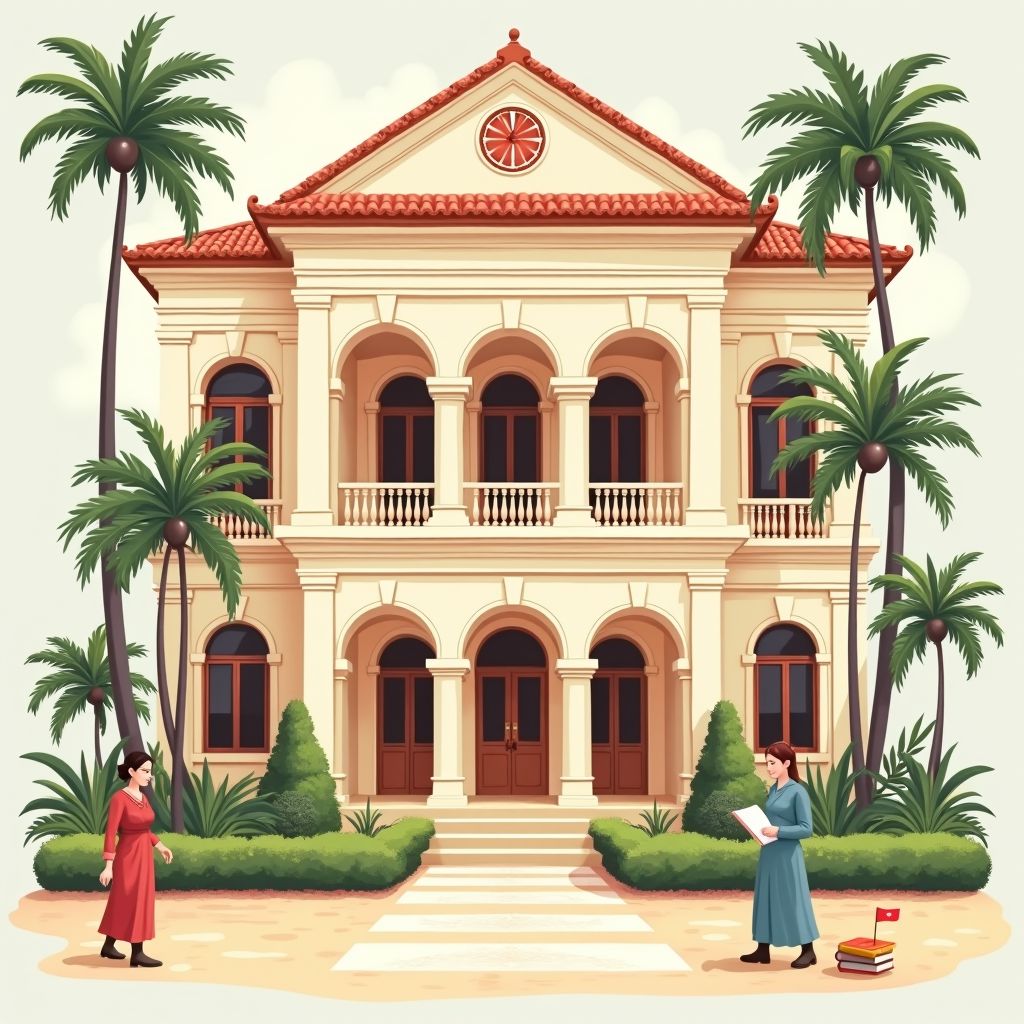
A centuries-old villa from the French colonial era in Da Nang, Villa 01 Pasteur, is on the brink of transformation that goes beyond a simple renovation. Although the building has long served as the headquarters of the Women’s Union, it has recently come into the spotlight due to a decision to repurpose it as a district police headquarters. What makes this building so exceptional? Experts consider it ‘exceptionally rare’ in architectural terms. Even more significantly, it stands as a symbol of the women’s movement, with a rich history tracing back to the 1966 struggle. Now, former leaders and cultural activists are calling for its preservation as a cultural monument. The decision, still under review, carries profound weight—not only for the city, but for how we choose to cherish our historical heritage.
A building with a living history
Villa 01 Pasteur in Da Nang, an architecturally unique structure from the French colonial period, is more than a stone edifice—it is a living symbol of resistance and continuity. Since 1975, the building has served as the headquarters of the Da Nang Women’s Union and has been described by experts as ‘exceptionally rare’ in the field of architecture [1]. This assessment is supported by the unique fusion of colonial design and local elements, distinguishing it from other buildings of the same era. The Women’s Union has effectively managed, preserved, and utilised the building across generations, maintaining both its architectural and landscape values [1]. Beyond its aesthetic appeal, the site holds deep historical significance: it was a central location during the ‘76 days and nights of control by merchants and students’ in 1966, a pivotal phase in the women’s movement in Da Nang [1].
Police headquarters instead of cultural monument?
On 28 October 2025, the People’s Committee of Da Nang city approved the allocation of the house and grounds at 01 Pasteur for use as the headquarters of Hai Chau District Police [1]. Although formally adopted, this decision has sparked intense public and cultural debate. On 4 November 2025, the Permanent Committee of the People’s Council of Da Nang commissioned an investigation into the suitability of the function, scale, and architectural transformation of the building [1]. The results of this study, scheduled to be completed by Friday, according to the planned timeline, are central to the decision-making process [1]. Advocates of the police relocation highlight the practical need for a central location within the district, but critics warn that redeveloping the building could undermine its cultural and historical core. The Women’s Union, led by Chairperson Hoang Thi Thu Huong, emphasises that the project has been managed functionally, responsibly, and sustainably across generations without compromising architectural integrity [1].
Former leaders call for heritage preservation
Nguyen Thi Van Lan, former head of the Mass Mobilisation Committee of the Da Nang City Party Committee and head of the connection committee of the Women’s Resistance Association, has written an open letter advocating for the preservation of the headquarters at 01 Pasteur [1]. Her argument is clear: preserving the building ensures the continuity of the Women’s Union’s operations, safeguards the functionality of the organisation, and directly contributes to the management and restoration of valuable, centuries-old architectural works [1]. She stresses that the building is not merely a cultural monument, but also a ‘red address’ for the revolutionary tradition of the women’s movement—a place where ‘women demand the right to live’ [1]. This phrase refers to a significant movement tied to the historical role of the Quang Da Special Zone Women’s Association, which played an essential part in past social and political mobilisation [1].
The eyes of the city focused on a decision
The decision regarding the future of Villa 01 Pasteur carries significant weight—not only for the Women’s Union and Hai Chau District Police, but for the entire city of Da Nang. On 4 November 2025, Thanh Nien reported that the Permanent Committee of the People’s Council had initiated the investigation into the suitability of the function, scale, and architectural transformation, though no final evaluation or results had been reported by Friday, 7 November 2025 [1]. This means the final decision remains dependent on the pending conclusions of the study [1]. Da Nang is thus confronted with a critical choice: prioritise the functional needs of the police or uphold the value of cultural heritage that anchors the city’s identity. The debate surrounding Villa 01 Pasteur is not merely about a building—it is a mirror reflecting how a community values its past and shapes its future [1].