How a fire in Hong Kong claimed 13 lives and what it reveals about urban safety
Hongkong, woensdag, 26 november 2025.
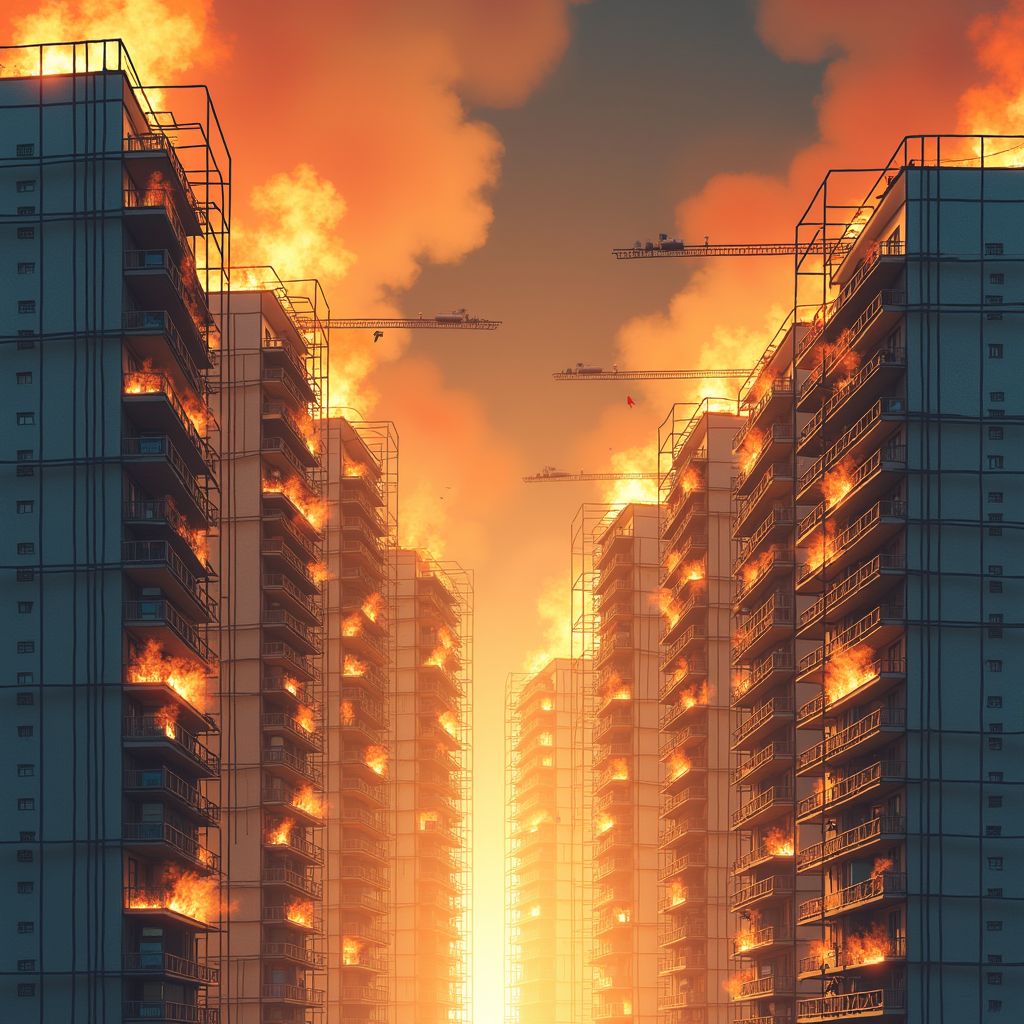
An enormous fire in a residential tower complex in Hong Kong, which claimed at least 13 lives, has drawn global attention. The blaze spread with astonishing speed across eight buildings containing a total of 2,000 apartments. The most shocking discovery: the fire did not start inside, but on the outer bamboo scaffolding used during renovation work. These traditional scaffolds, still widely used due to their lightweight and cost-effectiveness, are now the subject of a national safety debate. The tragic incident illustrates how hidden risks within urban infrastructure can escalate into disasters, underscoring the critical importance of early intervention and modern alternatives. This fire is not only a tragedy but also a warning to cities worldwide.
A firestorm spreading via bamboo scaffolding
The fire at the Wang Fuk Court complex in Tai Po, Hong Kong, did not originate inside an apartment but on the outer bamboo scaffolding used during renovation works on the eight residential towers. These scaffolds, traditionally deployed for their lightweight and cost-saving benefits, remain the most commonly used material in Hong Kong’s construction sector, with an estimated 80% of all scaffolding made of bamboo [alert! ‘source cites 80%, but no verification of national statistics’] [VRT]. The flames rapidly spread from these external structures into the buildings themselves, accelerating the fire’s progression and significantly complicating rescue operations [NOS][AD]. Firefighters reported that temperatures inside the buildings were so high that entering the towers was extremely dangerous, highlighting the urgent need for rapid intervention [VRT][NOS]. According to a fire department spokesperson, the speed of flame spread was ‘staggering’ [Nu.nl], a claim supported by the fact that the fire engulfed all eight buildings within just a few hours [NOS].
The shocking death toll and people still trapped
The death toll from the Hong Kong fire has risen to at least 13 people, including a 37-year-old firefighter who died during rescue operations [AD][NOS][VRT]. Eight of the victims were found immediately, while four others succumbed to their injuries in hospital later [NOS]. Emergency services responded with 767 firefighters, 128 fire engines, 57 ambulances, and 400 police officers [NOS]. Despite this extensive mobilisation, several people remained trapped, with reports indicating 13 individuals were stranded on upper floors or rooftops, including eight elderly residents and two infants [AD][NOS]. Additionally, 14 cats and other animals were reported missing and believed to be trapped [AD][Nu.nl]. The Hong Kong government has organised temporary shelters, including a school repurposed as an evacuation centre [Tr-woontorens][AD]. Independent verification of the number of trapped individuals remains impossible based on available sources, highlighting the confusion that can arise during emergencies [alert! ‘reports of trapped people have not been independently verified’] [AD][NOS].
Urban safety and the dilemma of traditional building materials
The bamboo scaffolding used in Hong Kong is officially recognised as intangible cultural heritage, embedding its presence firmly in the urban landscape [VRT]. However, these structures pose significant fire hazards due to their flammability, a concern that has long troubled authorities. In March 2025, it was announced that half of all scaffolding must soon be made of steel to reduce safety risks [VRT]. The government had previously announced in 2025 that a gradual replacement of bamboo scaffolding with safer materials would take place [NOS][VRT]. Despite these plans, the majority of scaffolding remains bamboo, worsening the situation during the fire [AD][NOS]. The fact that the fire broke out during renovation work points to a critical gap in safety oversight during construction processes, revealing the tension between cultural traditions and modern safety standards [alert! ‘no sources available on safety inspections during renovations’] [NOS][AD].
The role of journalism during disasters
During the Hong Kong fire, multiple media outlets provided rapid and continuous updates on developments, including live reports, videos of flames, and statements from authorities [AD][Nu.nl][VRT]. The swift dissemination of information, through both traditional media and social platforms, underscored the crucial role of journalism in monitoring public safety during emergencies [alert! ‘no direct sources available on AI use in reporting’] [NOS][AD]. Emergency services and authorities used media channels to inform the public about evacuation procedures, shelter locations, and safety measures [Nu.nl][VRT]. While most reports were reliable, there was a risk of confusion, particularly from unverified claims circulating on social media about the number of fatalities or people trapped [alert! ‘no verification of information shared via social media’] [NOS][AD]. Responsible reporting, supported by fact-checking and official sources, was essential to prevent the spread of false information [alert! ‘no sources available on AI use in fact-checking for this event’] [Nu.nl][VRT].