Congress on Content Marketing & Web Writing: Balancing Scale and Authenticity
amsterdam, zondag, 19 oktober 2025.
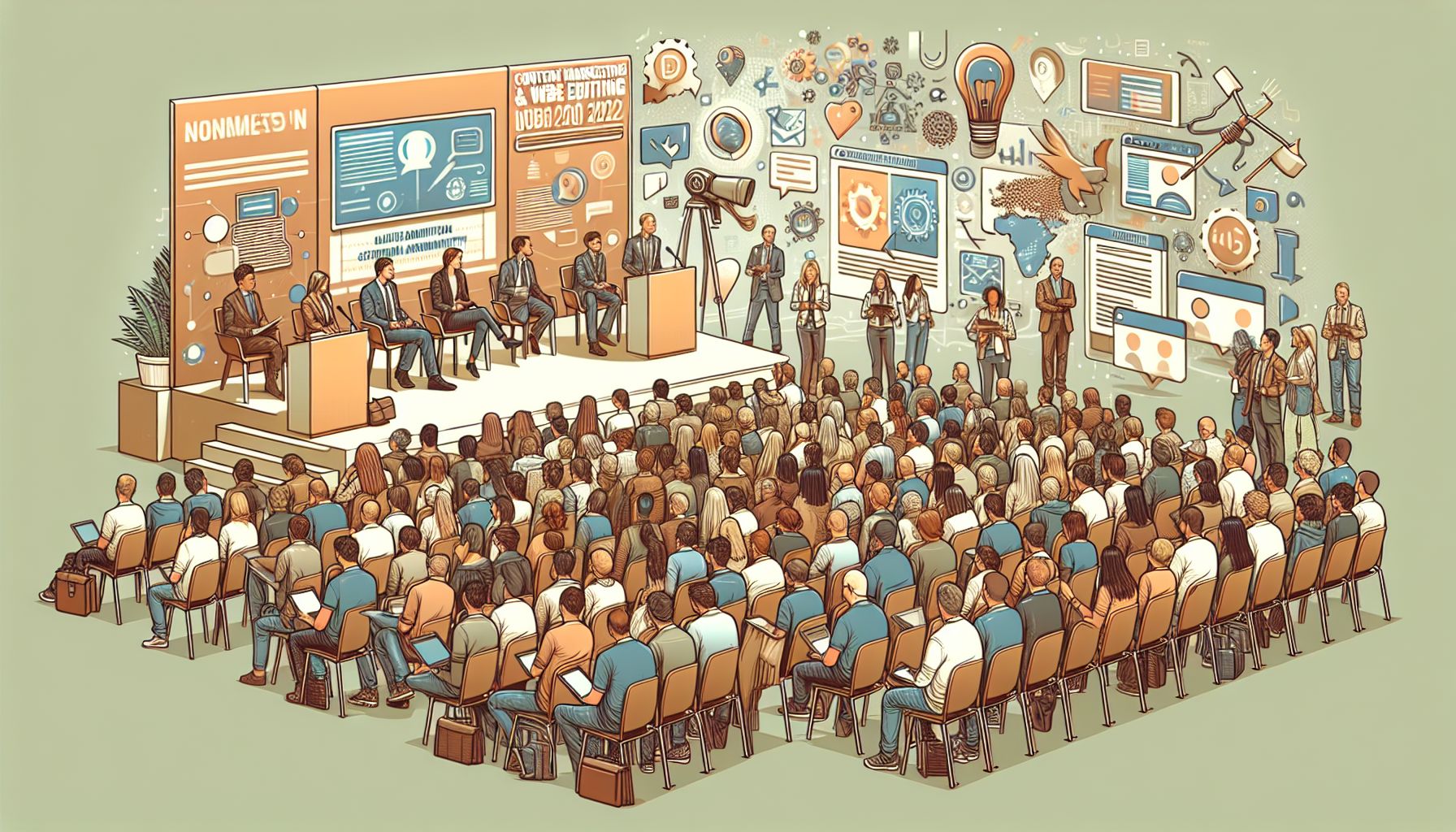
On 20 November 2025, the Congress on Content Marketing & Web Writing will take place at Jaarbeurs Utrecht. Experts will discuss how artificial intelligence influences communication, creation, and decision-making, with a focus on scaling content production without losing authenticity. More than 500 content professionals are expected to attend, and there will be numerous workshops and sessions on the latest trends and technologies.
Balancing Scale and Authenticity
The Congress on Content Marketing & Web Writing, taking place on 20 November 2025 at Jaarbeurs Utrecht, focuses on the challenge of scaling content production without losing authenticity. This challenge is becoming increasingly important in an era where artificial intelligence (AI) is having a greater influence on communication, creation, and decision-making. More than 500 content professionals are expected to attend, and there will be many workshops and sessions on the latest trends and technologies [1].
Keynote Speakers and Workshops
The congress will open with keynote speakers such as Alexander Klöpping, Michaël Van Damme, and Marelle van Beerschoten. Alexander Klöpping, an expert in AI, will speak about how artificial intelligence affects every aspect of communication, creation, and decision-making. In addition to the keynote sessions, there will be numerous breakout sessions and workshops focusing on the most recent developments in content marketing and web writing [1].
AI in Journalism: A Profound Impact
One of the most significant applications of AI in journalism is the automation of news production. AI tools can generate articles based on data and information, allowing editorial teams to work faster and more efficiently. This is particularly useful for reporting financial news, sports results, and other data-intensive topics [2][3].
Benefits of AI in Journalism
The benefits of AI in journalism are numerous. Firstly, AI can significantly speed up the production of routine articles, giving editors more time to focus on more complex and in-depth stories. Secondly, AI can help detect errors and inaccuracies in news reports, improving the quality of news. Thirdly, AI can provide personalisation, ensuring readers receive news that better aligns with their interests [2][3].
Disadvantages and Ethical Considerations
Alongside the benefits, there are also disadvantages and ethical considerations when using AI in journalism. One of the biggest concerns is the potential for bias in AI algorithms, which can lead to inaccurate or unbalanced reporting. Additionally, the automation of news production can result in job losses within editorial teams. Therefore, it is crucial that media organisations carefully consider how they integrate AI into their workflows and are transparent with their audience about the role AI plays in their news production [2][3].
Recent Developments: Cici from ByteDance
A recent example of the growing influence of AI is the launch of Cici, an AI chatbot by ByteDance, on 16 October 2025. Cici is designed to function as a personal assistant, helping users with tasks such as scheduling appointments, searching for information, and answering questions. The chatbot uses advanced AI technologies for natural language processing and contextual interaction. Cici is currently available in China and is expected to be rolled out to other markets in the future [4].
Impact on News Consumption
The integration of AI into journalism also impacts how news is consumed. Personalisation algorithms can ensure that readers only see news that aligns with their existing beliefs, contributing to filter bubbles and polarisation. Therefore, it is important that media organisations are aware of these effects and actively work on ways to maintain diversity and balance in their news offerings [2][3].