Why Taylor Swift's voice on social media probably isn't trustworthy right now
Amsterdam, vrijdag, 14 november 2025.
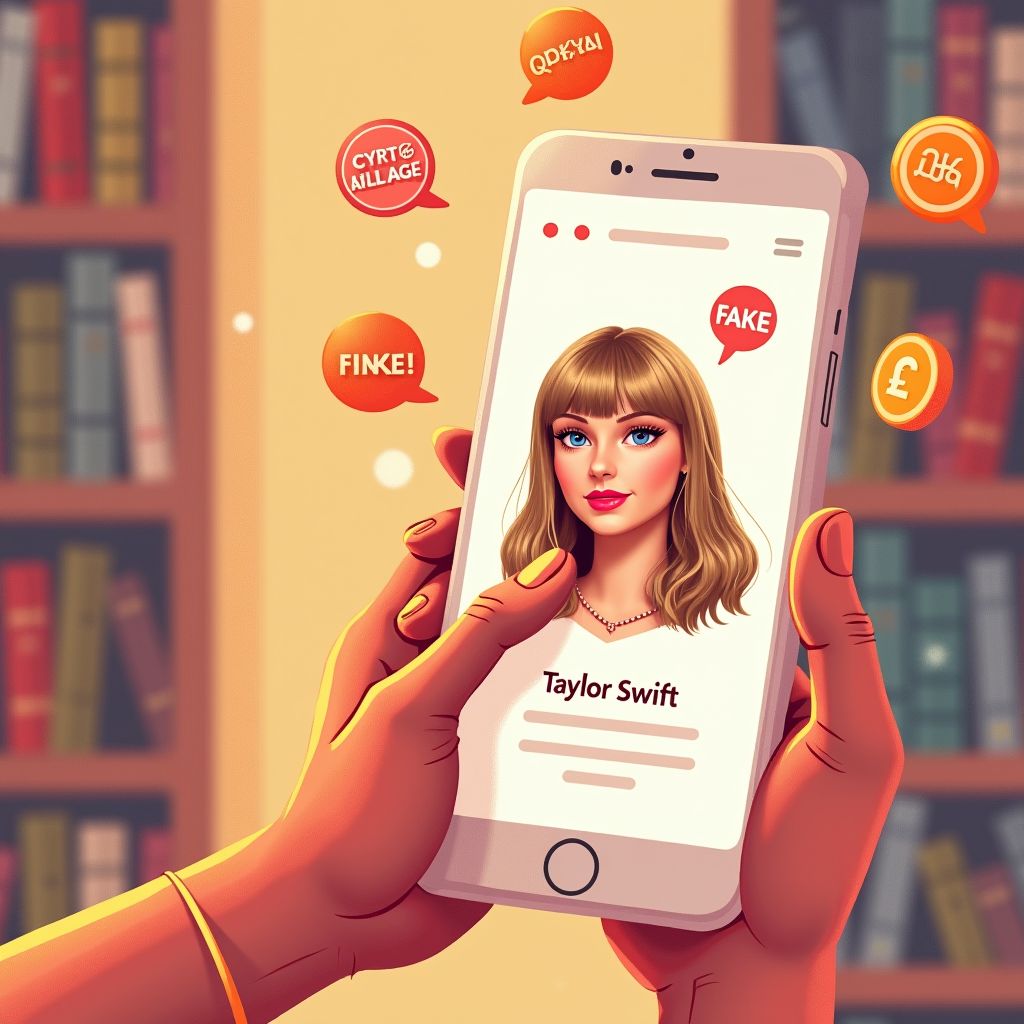
In November 2025, a new wave of online fraud rapidly spread across the world, primarily through AI-generated videos and audio recordings of Taylor Swift. These deepfakes, which realistically mimicked her voice and appearance, were used to promote fake giveaways, counterfeit products, and cryptocurrency investment scams. Most alarming: 39% of Americans have already clicked on such fake content, and 1 in 10 lost money—averaging $525 per victim. Scammers leveraged her public relationship with Travis Kelce as a springboard for ‘limited-edition’ scams. But the danger isn’t limited to financial loss: the technology is so advanced that even experienced users are misled—and sometimes fail to realise they’re viewing AI-generated imagery. The rise of this fraud underscores how quickly digitisation is blurring the line between reality and deception.
Taylor Swift at the top of AI-driven identity theft
In November 2025, Taylor Swift was once again the most widely targeted celebrity worldwide by AI-generated fraud, according to the McAfee 2025 Most Dangerous Celebrity: Deepfake Deception List, published on 2025-11-12 [2]. She ranked at the top of both the American and international lists of most deepfaked celebrities, followed by Scarlett Johansson, Jenna Ortega, and Sydney Sweeney [2][4]. The surge in these deepfakes is no coincidence: cybercriminals exploit the parasocial relationships fans have with their favourite artists, using the image of a trusted figure as a golden key to gain trust and cause deception [4]. Scammers employed advanced AI tools to imitate her voice, facial expressions, and social media behaviour—particularly during the period following her public engagement with Travis Kelce in May 2025, which served as the foundation for a wave of ‘limited-edition’ scams [2][4][6]. The most common forms of fraud included fake giveaways, purported Le Creuset kitchenware promotions, and fictitious cryptocurrency investments, with AI-generated content disseminated via social media platforms such as Instagram, TikTok, and X (formerly Twitter) [1][5][6].
The scale of the fraud and human reaction
The impact of these scams has been significant: a global 2025 McAfee survey, based on a sample of 8,600 adults across seven countries, reveals that 72% of Americans have encountered fake endorsements from celebrities or influencers, 39% have clicked on such content, and 1 in 10 has lost money or personal data [2][4][6]. The average financial loss per incident amounted to $525 [2][4][6]. These figures indicate a fundamental shift in how people assess trust in digital content. A woman in France lost nearly $900,000 in a romance scam involving an AI-generated voice and image of Brad Pitt used to manipulate her [4]. In another case, TV presenter Al Roker was faked in a scam that led to a heart attack, demonstrating the profound emotional and psychological harm that can result [4]. The psychological basis of these scams is straightforward: people instinctively trust faces they recognise, and criminals exploit this innate tendency to lower vigilance [4].
From theft to digital awareness: how society is responding
In response to the rise of deepfakes, various actors have begun developing countermeasures. The Vrije Universiteit Amsterdam launched a campaign on 2025-11-11 focused on media and digital literacy, where students use AI to create fictional scenarios illustrating the consequences of AI forgery, particularly within the context of the AZC (Algemene Ziekenfonds Centrum) [1]. The campaign was initiated while media coverage was already high regarding Taylor Swift deepfake scams, but the current status of the activities remains unclear, with no evidence of implementation [1]. McAfee itself offers a Scam Detector, an AI tool that analyses text, emails, and videos for suspicious patterns indicating deepfakes or phishing [2][4]. The tool is available in all core McAfee subscriptions and is recommended as a first line of defence [4]. Additionally, social platforms like Meta and TikTok have implemented policies against synthetic media, although automated detection still lags behind the pace at which criminals adapt their content [5]. The U.S. Federal Trade Commission (FTC) issued a public warning on 2025-11-13 to consumers about the Taylor Swift deepfake scam and advises verifying content through official channels [6].
How to spot fake news and deepfakes: practical tips
Although technology continues to advance, there are practical steps everyone can take to protect themselves from deepfakes. McAfee advises pausing before clicking on a link, especially when urgency or emotional manipulation is involved [1]. Always verify the source: check whether the content genuinely comes from the celebrity or company’s official account, and avoid websites that are unclear or request personal information [1][5]. Watch for unnatural characteristics: AI-generated images may show unexpected movements in the mouth, eyes, or hair, or appear with unnaturally smooth, plastic-like skin [4][6]. Some platforms, such as Instagram and TikTok, flag AI-generated content, but this is not standard and not always detected [4]. OpenAI acknowledges that their AI systems, such as Sora, have issues generating racist or inappropriate content, highlighting that the technology still has limitations [6]. If you suspect you’ve been targeted by a deepfake scam, report it through the FTC’s reporting portal or the National Center for Missing and Exploited Children (NCMEC) [6]. The red flags that remain relevant include urgency, emotional pressure, and requests for payment via unusual methods such as cryptocurrency, Venmo, or ‘small shipping fees’ [6].