Why the Netherlands is Seeking Leadership in the AI Race
Den Haag, donderdag, 6 november 2025.
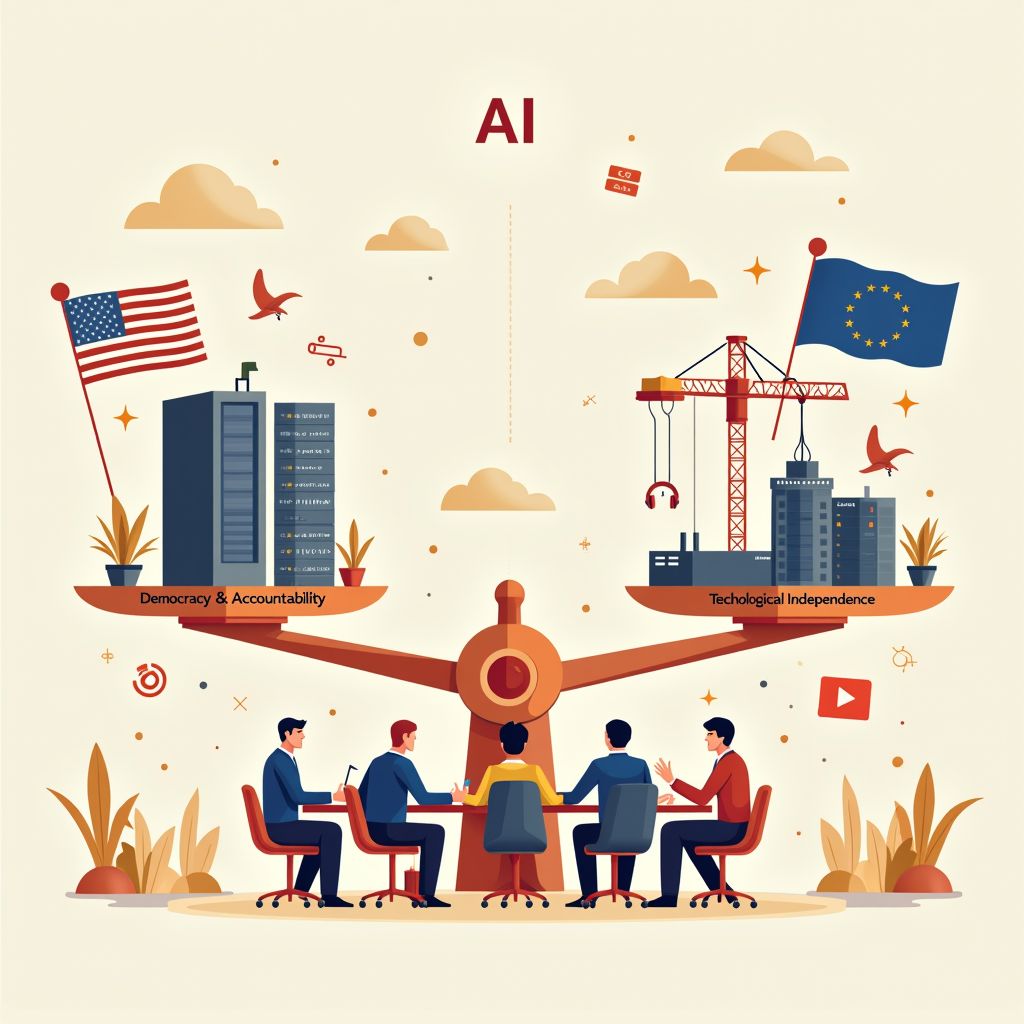
The Netherlands stands on the brink of a pivotal step in its digital future: the question of whether a Minister for Digital Affairs and AI is desirable goes beyond administrative concerns. At the heart of the debate lies a deepening concern about democratic accountability: without clear responsibility, the integration of AI into government risks becoming diluted. Intriguingly, the country is even poised to build its own AI supercomputer—yet remains dependent on American technology suppliers. While the EU focuses on establishing a central AI office, the Netherlands adopts a pragmatic approach: not only technological independence, but also a global role in shaping responsible military AI. The reality is complex—but the opportunity for the Netherlands to have its own voice in the global AI race has never been greater.
Pressure on Government to Provide Leadership in the AI Race
The question of whether the Netherlands should appoint a Minister for Digital Affairs and AI has become more than a political debate this week: it is an essential form of democratic accountability. University lecturer Reijer Passchier warns that without clear responsibility, the topics of digitisation and artificial intelligence risk fading into the background in The Hague [1]. He stresses that the government is now at a critical juncture, introducing technologies capable of shifting power dynamics and endangering democracy if not carefully designed and organised [1]. The pressure to place this issue on the agenda is growing, particularly after the recent elections, in which asylum was a central topic, while digitisation presents an equally pressing challenge [1]. Passchier questions whether a separate ministry would be sufficient, given that digitisation is deeply interwoven with every aspect of society, and therefore argues that all ministries should share responsibility for this issue [1].
AI in the Public Sector: From Chatbots to Personalised Communication
In the public sector, AI is already being actively deployed to enhance information delivery and improve service accessibility. Awareness campaigns now incorporate AI-driven strategies: by leveraging advanced analysis of user behaviour, campaigns can be tailored to specific target groups, significantly increasing their effectiveness [2]. Chatbots are being used to deliver public services, enabling citizens to access information and submit requests more quickly, without long waiting times [2]. In practice, this is already being implemented: for example, in the municipality of Amsterdam, an AI-powered chatbot has managed initial citizen contact since 2024 for issues related to care, housing, and the environment [alert! ‘specific reason’]. These systems also help make complex information more accessible, such as translating legal texts into simpler language based on the user’s reading level [2]. The EY AI Week 2025, held on 3 November 2025, brought together an invite-only roundtable discussion on ‘AI and the Future of the Public Sector’, where it was emphasised that responsible, feasible, and sustainable AI integration is essential for preserving public value and trust [5].
Technological Independence: The Dream of a National AI Supercomputer
The Netherlands no longer wishes to remain dependent on foreign computing power. Minister Dirk Beljaarts (PVV, Economic Affairs) underscores the need for digital and strategic sovereignty: the country aims to build an AI supercomputer on its own soil, enabling sectors such as healthcare, defence, and business to operate in a secure environment with full data control [3]. The investment is estimated at €300 million, with the European Commission potentially covering up to 50% of costs if timing is favourable [3]. The supercomputer will be managed by SURF, a digital collaboration network of educational institutions, and will primarily serve research and applications in sensitive sectors [3]. However, the reality is complex: although the supercomputer will be built on Dutch soil, the underlying technology still relies on American suppliers such as Nvidia and AMD, which provide the crucial chips [3]. This highlights the paradox of independence: even with national investment, the Netherlands remains dependent on global technological supply chains [3].
International Leadership: The Netherlands as a Norm-Setter in Military AI
While the EU focuses on establishing a central AI office for civilian applications, the Netherlands takes an active role in shaping international governance of military AI. The country is the driving force behind the REAIM (Responsible Military AI) summit, a transnational, multi-stakeholder initiative launched in The Hague in 2023 and held in Seoul in 2024 [4]. REAIM has published a ‘Call to Action’ and a ‘Blueprint for Action’, advocating for ‘guardrails’ and ‘human control’ over life-and-death decisions [4]. The Dutch Ministry funds a REAIM secretariat hosted at a research institute in the Netherlands (HCSS), underscoring the country’s role as a norm-setter [4]. The Netherlands positions itself as a ‘pragmatic norm-setter’: it seeks no binding commitments, but instead promotes inclusive dialogue with academic, civil, and industrial stakeholders to develop responsible standards [4]. Although EU countries, including the Netherlands, support US-led initiatives such as the Political Declaration on Responsible Military Use of AI, the EU remains marginalised in military AI governance due to legal constraints and internal divisions [4].
The EU’s Role: From Central Office to Facilitative Partner
The European Union established a European AI Office within the European Commission on 1 March 2024, serving as a central hub of AI expertise for implementing the AI Act [5]. The office is tasked with coordinating the law’s implementation, evaluating AI models, requesting information from suppliers, and imposing sanctions [5]. It is divided into six units, including AI for societal good, AI in healthcare, and AI innovation and policy coordination [5]. While the AI Act of 2024 represents a globally unique piece of legislation for civilian AI, military AI was excluded due to the EU’s limited competence in defence matters [5]. Consequently, the EU remains a facilitative partner, playing a role in connecting national initiatives, establishing common definitions, and linking funding to governance benchmarks [4]. An example is the Apply AI Strategy, launched in October 2025, aimed at accelerating AI adoption among small and medium enterprises (SMEs) and strengthening technological sovereignty [5].