How a library can enhance your safety – with a surprisingly fast response
Amersfoort, donderdag, 20 november 2025.
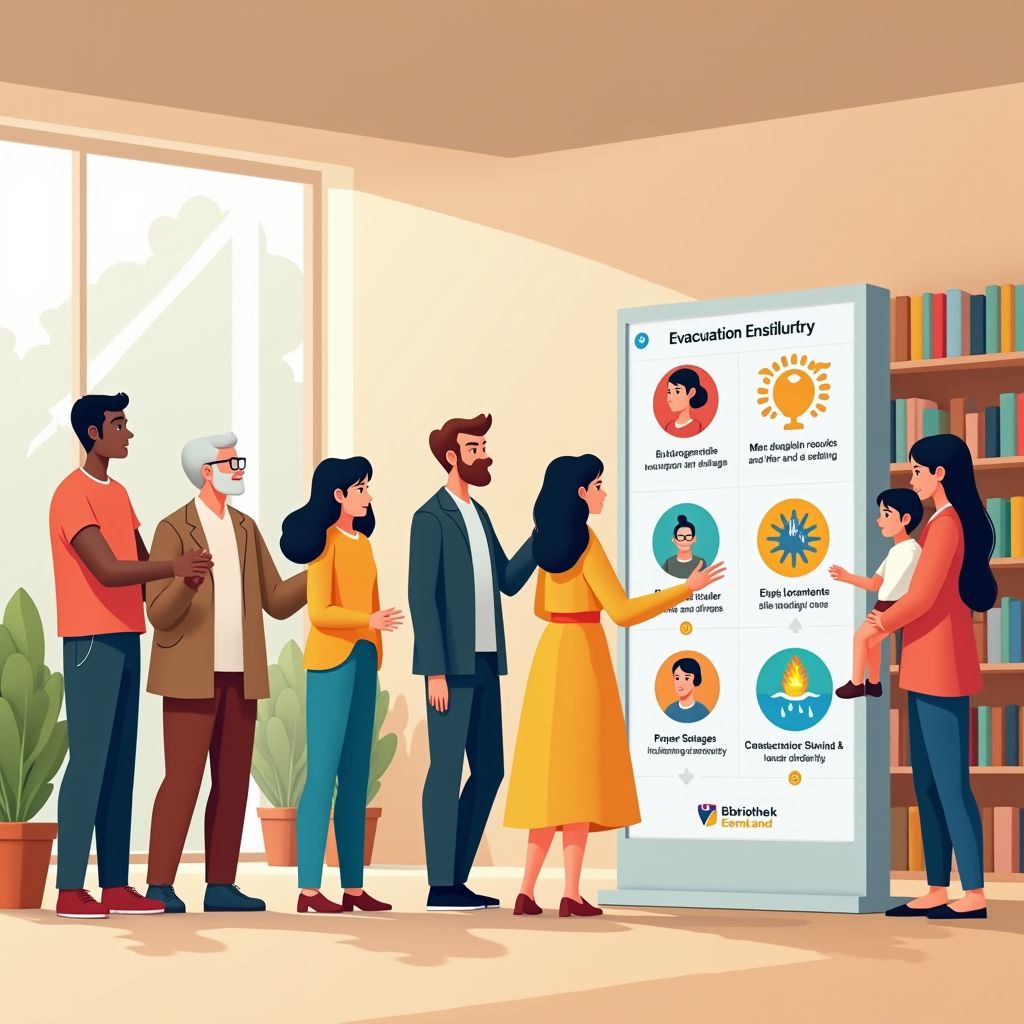
Imagine: within 30 minutes of a crisis, you receive exactly the information you need – no waiting, no confusion. This is now a reality thanks to an AI-driven information module developed by Bibliotheek Eemland in Amersfoort. Integrated into the local ‘Amersfoort Veilig’ app and the library’s website, the tool provides real-time, up-to-date data on evacuation routes, emergency shelters, and safe pathways, refreshed every 15 minutes. This is not science fiction: the system has been operational since October 2025 and was presented during a public evening event at the Eemhuis library. The project’s core ambition? To transform the library from a place of books into a central hub for residents seeking guidance on how to better prepare themselves and their neighbourhoods for storms, power outages, or flooding. Read on to discover how a simple conversation in a library can strengthen a city’s resilience.
A library as a safety hub: from books to crisis readiness
Bibliotheek Eemland in Amersfoort is evolving from a traditional knowledge institution into a dynamic centre for societal resilience. With an AI-driven information module integrated into the local ‘Amersfoort Veilig’ app and the library’s website [www.bibliotheek-eemland.nl/noodsituaties], the system delivers real-time updates on evacuation options, emergency shelter locations, and safe routes [source5]. Data is refreshed every 15 minutes via an API from the Provincial Emergency Services of Gelderland, ensuring rapid and accurate information delivery during emergencies [source5]. The system has been live since 5 October 2025 and was officially presented during a public evening event on 18 November 2025 at the Eemhuis library [source5]. These initiatives are part of the event ‘The world in the library: A more resilient Amersfoort’, organised in collaboration with Clingendael Café and Nieuwsplein33 [source1][source2][source3]. The focus is on strengthening citizen safety through digital tools and interactive awareness campaigns, with librarians supporting residents in creating personalised safety plans [source5][source1].
AI in action: faster than ever to stay informed
The heart of the AI tool lies in its ability to inform people more effectively than ever before within the first 30 minutes of a crisis [source5]. This speed is critical during emergencies, when timely information directly influences safe decision-making. The technology was developed in collaboration with local authorities and the Delft University of Technology, ensuring a multidisciplinary approach [source5]. The tool analyses real-time data from the Provincial Emergency Services of Gelderland and tailors the information based on user location, accessibility needs, and individual risk profiles. This personalised information delivery ensures that citizens receive not only accurate data but also content presented in a way that is clear and relevant to their specific circumstances – such as an elderly person with mobility challenges or a young parent with small children [source5]. The AI processes complex risk assessment data and makes it accessible through interactive models, including visual maps and concise text alerts. The tool is available via the Bibliotheek Eemland website and the ‘Amersfoort Veilig’ app, ensuring broad accessibility [source5].
From general campaigns to personalised information
AI-driven information campaigns deliver greater impact than traditional methods by addressing the specific needs of diverse target groups. The launch campaign ‘Think ahead: be prepared for a crisis’ was introduced on 19 November 2025 in Amstelveen and forms part of a broader awareness strategy [source5]. This campaign aims to raise public awareness about preventive measures such as assembling an emergency kit and keeping cash on hand [source5][source2]. In Amersfoort, the AI is used to customise these messages: parents receive information about childcare facilities, older adults get tips on food and medication, and workers receive guidance on working from home during power outages [source5]. Effectiveness is measured through usage history, click-through rates, and feedback scores collected via the app. While no exact statistics on usage rates have been provided, the tool’s design indicates a targeted approach. The next evaluation of the AI tool is scheduled for 15 March 2026, including a report to the Amersfoort municipal council [source5].
The challenges of AI in public information
Although the benefits of AI in public information are clear, several important challenges require attention. The main concerns revolve around privacy, inclusivity, and reliability. When collecting data via the app or website, strict care must be taken with personal information, especially when location data is involved [source5]. The library must comply with the General Data Protection Regulation (GDPR), though there is no explicit information on how data is stored or processed [source5]. Furthermore, there is a risk of a digital divide: not all citizens have access to smartphones or the internet, increasing the risk that certain groups – such as older adults or low-income individuals – may be excluded [source5][GPT]. There is no information on how the inclusivity of the AI tool is tested or improved, which represents a potential weakness [alert! ‘No information available on inclusivity assessment or test results’]. Additionally, the reliability of the AI depends on the quality of input data; if sources from the Provincial Emergency Services are valid but delayed, the AI could disseminate inaccurate or outdated information [source5]. There is no public transparency report detailing AI errors or system incidents, which limits overall transparency [alert! ‘No information available on incidents or error reports within the system’].
The future of information: from data to action
The role of the library as a knowledge hub in society is increasingly defined by digital innovation and citizen engagement. Bibliotheek Eemland demonstrates that knowledge centres should not only provide books but also deliver safety. By integrating AI into its outreach strategy, librarians can help residents transform complex risk information into concrete, actionable steps [source5]. The event ‘The world in the library: A more resilient Amersfoort’ serves as a bridge between experts, local authorities, and citizens, facilitating the sharing of knowledge and the real-time development of safety plans [source1][source3]. This collaboration between Clingendael, Nieuwsplein33, and Bibliotheek Eemland offers a model for other municipalities seeking to invest in participatory safety initiatives [source1][source2]. The rollout of the AI tool is a tangible step toward a future where information is faster, more personal, and more accessible – yet one where ethical and technical questions remain central to its success [source5].