Why a memorial for a wolf in Utrecht means far more than a simple farewell
utrecht, vrijdag, 5 december 2025.
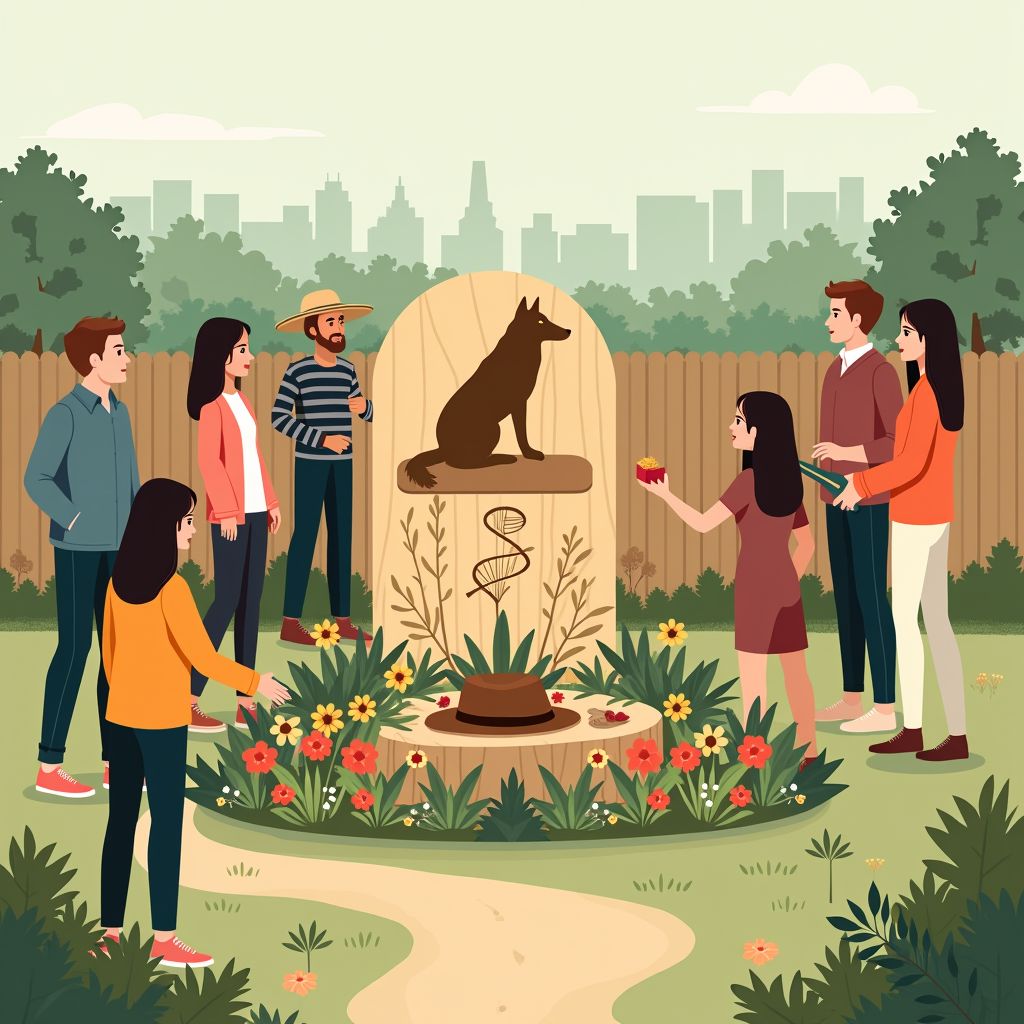
A memorial was held on the Utrechtse Heuvelrug for wolf Bram, a male wolf shot dead on 2 December 2025. Although his identity has not yet been definitively confirmed by DNA testing, which is expected to be revealed on 12 December 2025, his death has had a profound impact on the public. The most intriguing truth? Bram was not only an animal perceived as a threat, but also a symbol of the complex relationship between humans, nature, and agriculture. His presence sparked months of fear among farmers and residents, while animal rights organisations strongly advocated for his protection. The memorial reveals how a single animal can ignite a national debate about responsibility, emotion, and the boundary between wild and urban life. What began as a local incident has now become a mirror of our societal values.
The memorial as a societal mirror
On Friday, 5 December 2025, a memorial was held on the Utrechtse Heuvelrug for wolf Bram, a male wolf shot dead on 2 December 2025 [1]. Although his identity has not yet been definitively confirmed by DNA testing, which is expected to be revealed on 12 December 2025 [2], his death has had a profound impact on the public. The memorial, organised by local nature activists [1], demonstrates how one animal can spark a national debate about responsibility, emotion, and the boundary between wild and urban life [1]. The event has drawn attention from both local and national media, with a focus on the ethical and emotional dimensions of the story [1][3]. The memorial is seen as a symbol of the complex relationship between humans, nature, and agriculture [1].
From problem wolf to national symbol
Wolf Bram was identified in September 2025 as a threat to the environment and agriculture in the Utrechtse Heuvelrug, particularly in the municipality of Zeist [3]. He was officially designated GW3237m and had bitten a woman twice in May 2025 [2]. In August 2025, he bit a six-year-old child, leaving the boy with significant scratches and bite wounds [2]. These incidents led to provincial approval on 24 October 2025 for capturing and relocating wolves, including Bram, in an effort to manage the population and reduce agricultural risks [3]. The recommended measure ‘avoid the woods’ for the area around Zeist was in effect from 26 September to 24 November 2025, lasting over two months and resulting in financial losses, fear, and inconvenience for local businesses and residents [3]. The memorial illustrates how an animal initially seen as a threat has transformed into a living symbol of nature’s return to urban fringes [1].
Media attention and emotional narrative
Media coverage of wolf Bram has been substantial, with a focus on the ethical and emotional dimensions of the story within the context of nature management and human intervention [1]. Reporter Jeroen Holtrop from SBS6 covered the memorial and linked the emotions surrounding the wolf’s death to the large number of sheep attacked by wolves in recent years [1]. The memorial was organised by local nature activists and discussed in the news by Utrechtse Internet Courant on 5 December 2025 [1]. The topic was also addressed in the programme Vandaag Inside on 4 December 2025, where reporters and opinion leaders from De Telegraaf and Hart van Nederland discussed what the news is sparking conversation about across the Netherlands [6][7]. The memorial exemplifies how local stories can quickly be picked up by journalism that focuses on emotional and ethical dimensions [1].
Balancing protection and safety
The memorial for wolf Bram highlights the deep societal divide over the balance between animal protection and human safety [1]. Multiple animal organisations strongly opposed the killing of ‘Bram’ and lodged objections with the province; when the decision was delayed, they launched a legal case, which they ultimately lost [2]. The court granted permission to shoot the wolf on 20 July 2025 [2]. The province of Utrecht hopes to announce the DNA test results on Friday, 12 December 2025, which will confirm whether the wolf shot was indeed Bram [2]. Until then, the provincial advisory remains in force to avoid forests and other natural areas on the Utrechtse Heuvelrug, particularly the region between the A12 and A28 [2]. The balance between nature conservation and agriculture is being extensively discussed in the media [3].