Leiden Discusses the Impact of Fake News and AI During Election Season
leiden, woensdag, 15 oktober 2025.
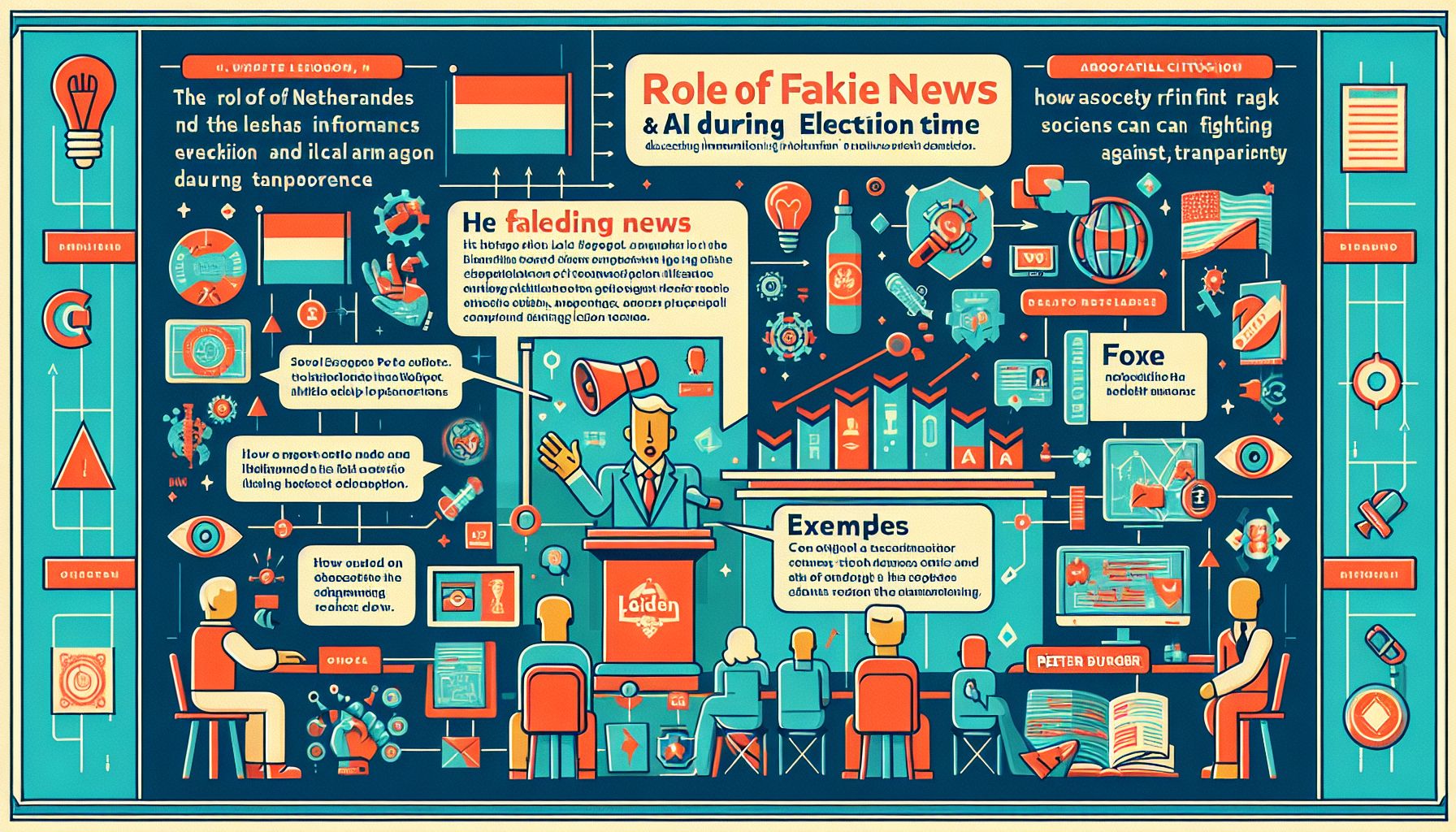
During the Leiden Current Affairs College on 14 October 2025, Peter Burger will discuss the role of fake news and AI in election campaigns. He will highlight how misleading information influences public opinion and how citizens can defend themselves against it. Using examples from the Netherlands and other countries, he will show the techniques employed and how society can fight back with critical thinking and transparency.
AI and the Spread of Fake News
AI plays a crucial role in both the spread and combat of fake news. According to Peter Burger, a professor at Leiden University, AI technologies are increasingly used to create and disseminate disinformation, especially during election periods. These techniques range from the use of chatbots on social media to the production of deepfakes—hyperrealistic videos that are difficult to distinguish from genuine content [1].
Impact on Media Literacy and Democracy
The spread of fake news has significant consequences for media literacy and democracy. Burger emphasises that misleading information can undermine trust in the media and influence public opinion. This can lead to polarisation and the weakening of democratic processes. It is therefore essential that citizens are aware of the techniques used to mislead them and how they can defend themselves [1].
Techniques for Combating Fake News
Several techniques have been developed to combat fake news. Researchers at Keele University, for example, have developed a machine learning model that can detect fake news with 99% accuracy [4]. Additionally, platforms such as Vastav AI in India and SmoothDetector from Concordia University provide practical tools to identify manipulated content [4]. However, these tools still face challenges, such as detecting new forms of manipulation and the possibility of false positives [4].
Practical Tips for Citizens
Peter Burger offers practical tips for citizens to recognise fake news. One important point is to verify the source of the news. Reliable media outlets often have a track record of accurate reporting and are transparent about their editorial process. It is also useful to consult multiple sources and think critically about the message being conveyed. Sharing links to fact checks is recommended, although research shows that this has only a small effect on reducing belief in fake news [2].
Regulation and Legal Measures
At the European level, the regulation of AI and fake news is being tightened. The EU has adopted the AI Act, which serves as the first global legal framework for AI. This law imposes stricter requirements on high-risk AI systems and prohibits certain practices deemed unacceptable, such as real-time biometric identification in public spaces [5]. Moreover, new career paths are emerging in technology and communication, enabling professionals to better contribute to combating fake news [4].
Historical Context and Future Perspectives
The fight against fake news has a long history, as evidenced by the collection of over 1,200 literary forgeries in the Bibliotheca Fictiva at Johns Hopkins University. This collection, spanning from the Middle Ages to modern times, illustrates that the battle against disinformation has been ongoing for centuries. While the scale and speed of modern media are unique, historical context provides valuable insights into the methods and motivations behind forgeries [3].