voorlichting

How artificial intelligence is transforming the legal system – and why it's genuinely important right now
tilburg, donderdag, 6 november 2025.
For the first time in the Netherlands, a professorship has been established specifically dedicated to the responsible role of AI within the rule of law. Francien Dechesne will take up her position at Tilburg University from 1 November 2025, with the central question: how can we ensure that AI is used fairly, transparently, and responsibly within the legal system? This is not merely a technical issue, but one of moral choices—such as those involved in risk assessments within criminal law. Intrigued? The chair is funded by the WODC, the scientific centre of the Ministry of Justice and Security, demonstrating that the government is now seriously engaging with the ethical implications of AI. This is not a distant vision; it is a step taken today to preserve public trust in the legal system tomorrow.
Comment l’intelligence artificielle transforme le système judiciaire – et pourquoi cela est désormais essentiel
tilburg, donderdag, 6 november 2025.
Pour la première fois aux Pays-Bas, une chaire universitaire spécifiquement dédiée au rôle responsable de l’intelligence artificielle au sein de l’État de droit est créée. Francien Dechesne prendra ses fonctions à l’Université de Tilburg à partir du 1er novembre 2025, avec pour question centrale : comment assurer que l’intelligence artificielle soit utilisée de manière équitable, transparente et responsable dans le système judiciaire ? Il ne s’agit pas uniquement d’une question technique, mais de choix éthiques – comme dans les évaluations de risque en droit pénal. Intriguant ? Cette chaire est financée par le WODC, le centre scientifique du ministère de la Justice, ce qui montre que l’État prend désormais sérieusement en compte les conséquences éthiques de l’intelligence artificielle. Ce n’est pas une vision du futur, mais une étape concrète prise aujourd’hui pour préserver demain la confiance dans la justice.
Hoe kunstmatige intelligentie het rechtssysteem verandert – en waarom dat nu echt belangrijk is
tilburg, donderdag, 6 november 2025.
Voor het eerst krijgt een hoogleraar in Nederland een specifieke leerstoel gewijd aan de verantwoorde rol van AI binnen de rechtsstaat. Francien Dechesne neemt vanaf 1 november 2025 haar functie aan Tilburg University op, met als kernvraag: hoe zorgen we dat AI in het rechtssysteem eerlijk, transparant en verantwoord wordt ingezet? Het is geen kwestie van techniek alleen, maar van morele keuzes – bijvoorbeeld bij risicobeoordelingen in het strafrecht. Intrigerend? De leerstoel wordt gefinancierd door het WODC, het wetenschappelijk centrum van het ministerie van Justitie, wat laat zien dat de overheid nu serieus meedenkt over de ethische gevolgen van AI. Dit is geen toekomstvisie, maar een stap die vandaag wordt genomen om morgen vertrouwen te behouden in het recht.
Why the Netherlands is Seeking Leadership in the AI Race
Den Haag, donderdag, 6 november 2025.
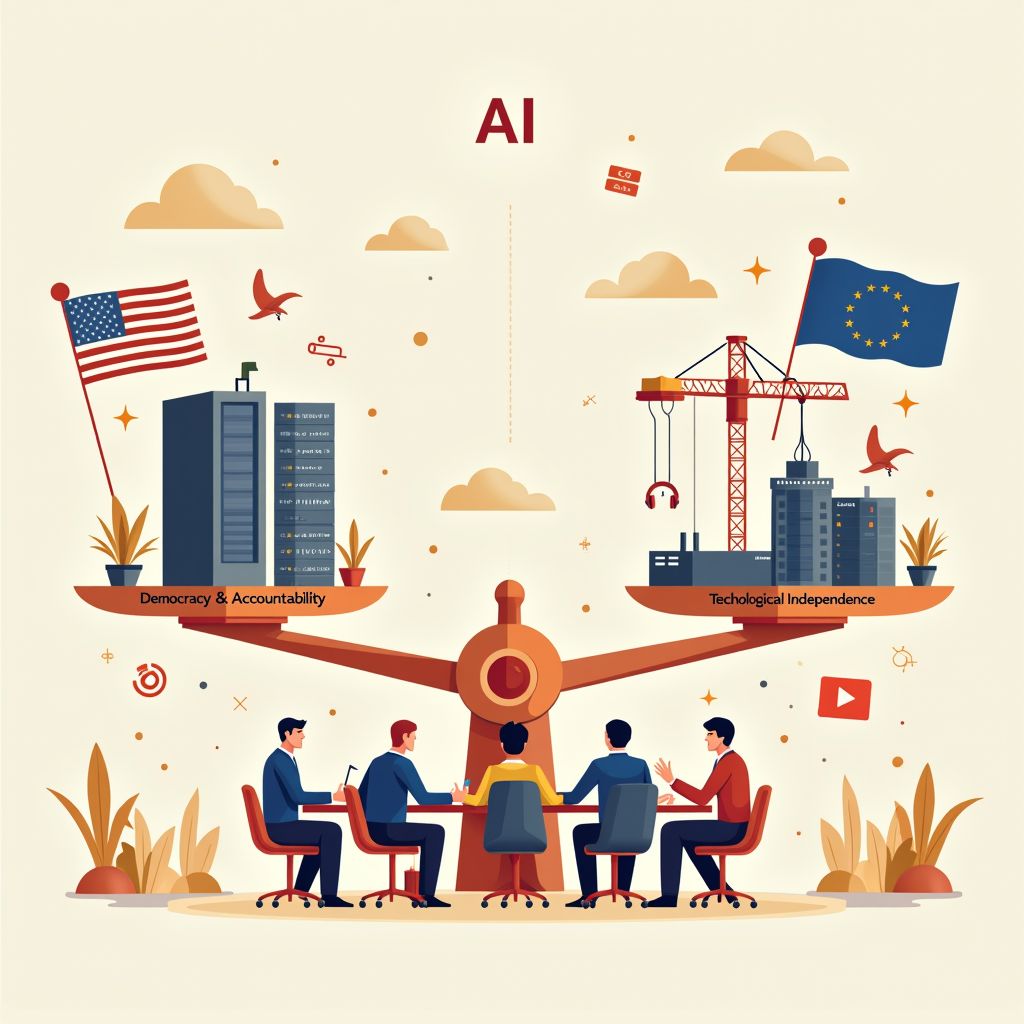
The Netherlands stands on the brink of a pivotal step in its digital future: the question of whether a Minister for Digital Affairs and AI is desirable goes beyond administrative concerns. At the heart of the debate lies a deepening concern about democratic accountability: without clear responsibility, the integration of AI into government risks becoming diluted. Intriguingly, the country is even poised to build its own AI supercomputer—yet remains dependent on American technology suppliers. While the EU focuses on establishing a central AI office, the Netherlands adopts a pragmatic approach: not only technological independence, but also a global role in shaping responsible military AI. The reality is complex—but the opportunity for the Netherlands to have its own voice in the global AI race has never been greater.
Pourquoi les Pays-Bas cherchent-ils à prendre la tête dans la course à l'IA
Den Haag, donderdag, 6 november 2025.
Les Pays-Bas sont sur le point de franchir un pas décisif dans l’avenir numérique : la question de savoir s’il est souhaitable d’instaurer un ministre des Affaires numériques et de l’intelligence artificielle va bien au-delà d’une simple question administrative. Le cœur du débat réside dans une préoccupation profonde concernant la responsabilité démocratique : sans une responsabilité claire, l’intégration de l’IA dans l’administration risque de se diluer. Ce qui est troublant, c’est que les Pays-Bas préparent même la construction d’une supercalculatrice nationale dédiée à l’IA – tout en restant dépendants des fournisseurs technologiques américains. Alors que l’Union européenne s’efforce de mettre en place un bureau central d’IA, le pays opte pour une approche pragmatique : non seulement l’indépendance technologique, mais aussi un rôle mondial dans la définition d’une IA militaire responsable. La réalité est complexe – mais la chance pour les Pays-Bas d’avoir une voix propre dans la course mondiale à l’IA est plus grande que jamais.
Waarom Nederland op zoek is naar leiding in de AI-gevecht
Den Haag, donderdag, 6 november 2025.
Nederland staat op het punt een beslissende stap te zetten in de digitale toekomst: de vraag of een minister van Digitale Zaken en AI wenselijk is, is meer dan een administratieve kwestie. De kern van het debat is een diepe zorg over democratische verantwoording: zonder duidelijke verantwoordelijkheid dreigt AI-integratie in de overheid te verwateren. Intrigerend is dat Nederland zelfs op het punt staat een eigen AI-supercomputer te bouwen – maar blijft afhankelijk van Amerikaanse technologieleveranciers. Terwijl de EU zich richt op het opzetten van een centrale AI-kantoor, kiest het land voor een pragmatische benadering: niet alleen technologische onafhankelijkheid, maar ook een wereldwijde rol in het vormgeven van verantwoorde militaire AI. De realiteit is complex – maar de kans op een eigen stem in de wereldwijde AI-gevecht is groter dan ooit.

How generative AI is making e-learning faster and more personal in the Netherlands
Amsterdam, woensdag, 5 november 2025.
Imagine creating a complete learning module in just a few minutes, tailored to your target audience, featuring an engaging avatar explaining how to work safely. This is now possible thanks to the new generative AI features in Adobe Captivate, which have been available in the Netherlands since last week. The most striking capability? AI can now generate contextually appropriate learning objectives, scenarios, and quiz questions—but only if you phrase the prompt correctly. A vague request like ‘write something’ produces no useful output, whereas a clear instruction such as ‘create a one-minute video for new employees about safety rules, in an informal tone’ results in professional, engaging material. The tool doesn’t rely on full automation, but on smart collaboration between human and machine—and that is the real breakthrough.
Comment l'intelligence artificielle générative transforme l'e-learning en Pays-Bas en le rendant plus rapide et personnalisé
Amsterdam, woensdag, 5 november 2025.
Imaginez : créer en quelques minutes une complète module d’apprentissage, adapté à une cible précise, avec un avatar vivant qui explique comment travailler en toute sécurité. C’est désormais possible grâce aux nouvelles fonctions d’intelligence artificielle générative intégrées à Adobe Captivate, disponibles depuis la semaine dernière aux Pays-Bas. La fonction la plus marquante ? L’IA peut désormais générer des objectifs d’apprentissage, des scénarios et des questions de quiz pertinents dans leur contexte — mais uniquement si la requête est bien formulée. Une question mal formulée comme « écrivez quelque chose » ne produit rien de pertinent, tandis qu’une instruction claire comme « créez une vidéo de 1 minute pour les nouveaux collaborateurs sur les règles de sécurité, dans un ton informel » donne un résultat professionnel et engageant. L’outil ne repose pas sur une automatisation totale, mais sur une collaboration intelligente entre humain et machine — et c’est là le véritable pas décisif.
Hoe generatieve AI in Nederland e-learning sneller en persoonlijker maakt
Amsterdam, woensdag, 5 november 2025.
Stel je voor: binnen enkele minuten een volledige leermodule creëren, afgestemd op de doelgroep, met een levendige avatar die vertelt hoe je veilig werkt. Dat is nu mogelijk dankzij de nieuwe generatieve AI-functies in Adobe Captivate, die sinds vorige week in Nederland beschikbaar zijn. De meest opvallende mogelijkheid? AI kan nu contextueel geschikte leerdoelen, scenario’s en quizvragen genereren — maar alleen als je de prompt goed formuleert. Een slecht geformuleerde vraag zoals ‘schrijf iets’ levert niets nuttigs op, terwijl een duidelijke instructie zoals ‘maak een 1-minuten video voor nieuwe medewerkers over veiligheidsregels, in informele toon’ resulteert in professioneel, aansprekend materiaal. De tool draait niet op automatie, maar op slimme samenwerking tussen mens en machine — en dat is de echte baanbrekende stap.

How the Netherlands Is Keeping Young People Safe in the AI Age
Amsterdam, dinsdag, 4 november 2025.
On Tuesday, 3 November 2025, the Netherlands launched its national rollout of a specially adapted AI assistant for teenagers: Copilot for Teens. Developed in collaboration with the Ministry of Education, Culture and Science (OCW) and the Dutch Education Council, the tool is not only a helper for homework or studying, but also an educational partner that teaches young people how to navigate fake news, privacy, and ethics in the digital world. What makes this approach unusual is that AI responses are tailored to a PG-13 standard—meaning they are safe, relevant, and designed for young minds. This step marks a unique fusion of technology, education, and future-oriented care, where responsibility lies not with the user, but with the developer.
Comment les Pays-Bas protègent les jeunes dans l'ère de l'IA
Amsterdam, dinsdag, 4 november 2025.
Mardi 3 novembre 2025, les Pays-Bas ont lancé le déploiement national d’un assistant IA spécialement conçu pour les adolescents : Copilot pour les adolescents. Outil développé en collaboration avec le ministère de l’Éducation et le Conseil de l’Éducation néerlandais, ce système n’est pas seulement un outil d’aide aux devoirs ou d’étude, mais aussi un partenaire éducatif qui enseigne aux jeunes à gérer les fausses informations, la vie privée et l’éthique dans le monde numérique. Ce qui est inhabituel : les réponses de l’IA sont adaptées à une norme PG-13, signifiant qu’elles sont sûres, pertinentes et pensées pour les esprits jeunes. Cette initiative marque une combinaison unique de technologie, d’enseignement et de préoccupation pour l’avenir — où la responsabilité ne repose pas sur l’utilisateur, mais sur le développeur.
Hoe Nederland jongeren veilig maakt in de AI-leeftijd
Amsterdam, dinsdag, 4 november 2025.
Op dinsdag, 3 november, startte in Nederland de nationale uitrol van een speciaal aangepaste AI-assistent voor tieners: Copilot voor tieners. De tool, ontwikkeld in samenwerking met het ministerie van Onderwijs en de Onderwijsraad, is niet alleen een hulpmiddel voor huiswerk of studie, maar ook een educatieve partner die jongeren leert omgaan met nepnieuws, privacy en ethiek in de digitale wereld. Wat ongebruikelijk is: de AI-antwoorden worden afgestemd op een PG-13-standaard, wat betekent dat ze veilig, relevant en ontwikkeld voor jonge geesten zijn. Deze stap markeert een unieke combinatie van technologie, onderwijs en zorg voor de toekomst — waarbij de verantwoordelijkheid niet bij de gebruiker ligt, maar bij de ontwikkelaar.