voorlichting

A Step into the Past: How a Dutch Street Comes to Life in 2026
Nederland, dinsdag, 18 november 2025.
Imagine standing on the Rokin in Amsterdam, and suddenly the 17th century unfolds before your eyes: a vivid depiction of the world’s first stock exchange, with people in period clothing and horses trotting over the cobbles. That is exactly what the new series ‘Straten van Toen’ achieves, using artificial intelligence to seamlessly reconstruct historical scenes from old paintings, photographs, and archival material. Launching on HISTORY from January 2026, the series allows viewers to experience how the Netherlands once looked in real time—without disrupting the narrative. The most striking element is that historian Corjan Mol himself appears within these past scenes, as if he has truly travelled back in time. A unique fusion of technology and history that does not just make the past readable, but truly tangible.
Pas vers le passé : comment une rue néerlandaise renaît en 2026
Nederland, dinsdag, 18 november 2025.
Imaginez-vous debout sur le Rokin à Amsterdam, et soudainement, le XVIIe siècle apparaît sous vos yeux : une scène vivante du premier marché boursier du monde, avec des personnes vêtues à l’ancienne et des chevaux foulant les pavés. C’est précisément ce que fait la nouvelle série ‘Straten van Toen’, grâce à une intelligence artificielle qui utilise des peintures anciennes, des photos et des archives pour reconstruire de manière fluide des scènes historiques. Cette série, diffusée à partir de janvier 2026 sur HISTORY, permet aux téléspectateurs de vivre en temps réel à quoi ressemblait les Pays-Bas autrefois — sans jamais altérer le récit. Ce qui frappe le plus, c’est que l’historien Corjan Mol apparaît lui-même dans ces scènes du passé, comme s’il avait réellement fait un retour dans le temps. Une combinaison unique de technologie et d’histoire qui rend la chronologie non seulement lisible, mais véritablement ressentie.
Stap naar het verleden: hoe een Nederlands straatje in 2026 tot leven komt
Nederland, dinsdag, 18 november 2025.
Stel je voor dat je op de Rokin in Amsterdam staat, en plotseling verschijnt de 17e eeuw voor je ogen: een levendig beeld van de werelds eerste effectenbeurs, met mensen in oude kledij en paarden die over de plaveis vegen. Dat is precies wat de nieuwe serie ‘Straten van Toen’ doet, met behulp van kunstmatige intelligentie die oude schilderijen, foto’s en archiefmateriaal gebruikt om historische scènes naadloos te reconstrueren. De serie, die vanaf januari 2026 te zien is op HISTORY, laat kijkers in real-time meemaken hoe Nederland er ooit uitzag — en dat zonder het verhaal te verstoren. De meest opvallende kant is dat de historicus Corjan Mol zelf in die verleden-scènes verschijnt, alsof hij echt terug is gereisd. Een unieke combinatie van technologie en geschiedenis die geschiedenis niet alleen leesbaar maakt, maar écht voelbaar.
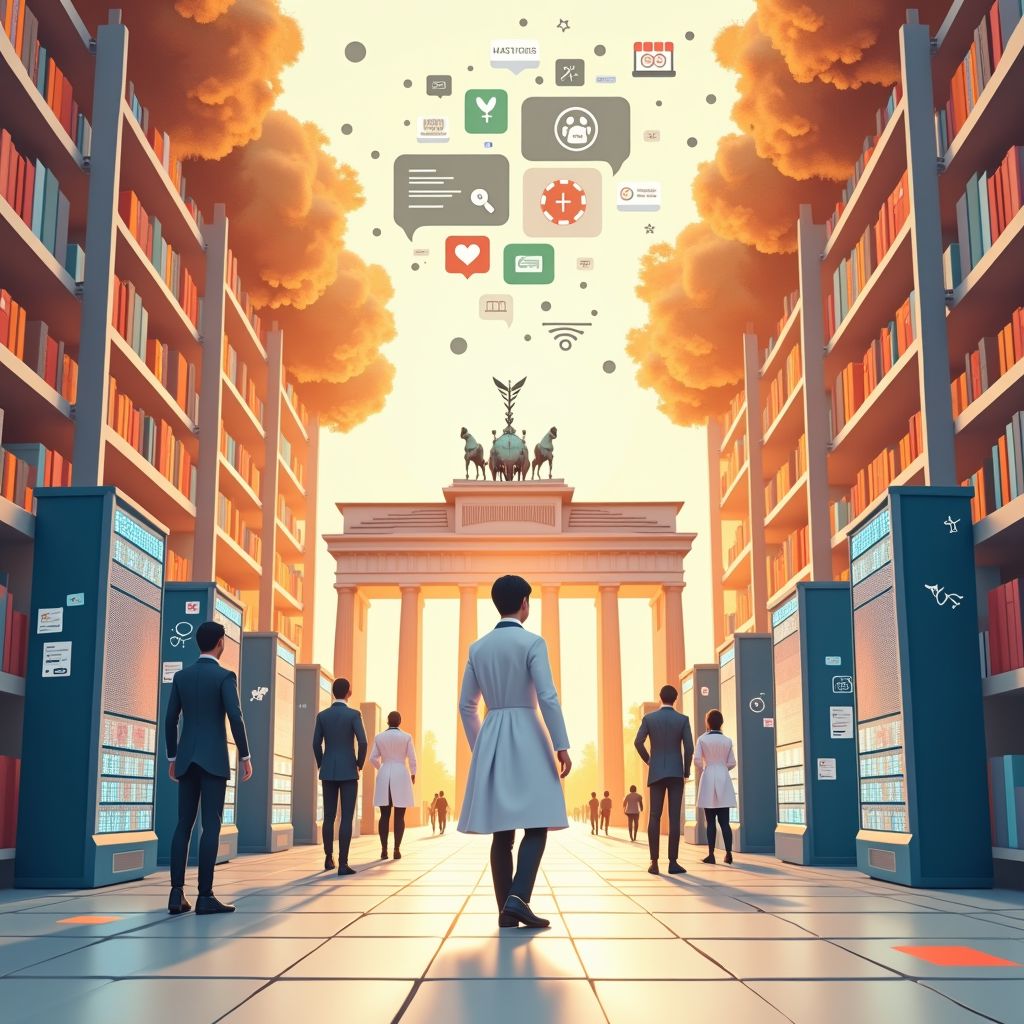
How Germany Is On the Brink of Gaining an AI Advantage
Berlijn, maandag, 17 november 2025.
Germany is on the verge of a profound economic transformation, where artificial intelligence is no longer a distant vision but a daily reality. One of the most striking developments: Google is investing €5.5 billion in German data centres and AI infrastructure, with direct impacts on employment and productivity. At the same time, Berlin is opening a new AI institute for medicine, led by a leading scientist. The government aims to invest €18 billion in AI by 2030, while 1.2 million jobs will transform within the next decade. The real catalyst? A powerful combination of public ambition, major private investment, and an unprecedented focus on education. What this means for your future, read on.
Comment l'Allemagne est sur le point de prendre une avance en matière d'intelligence artificielle
Berlijn, maandag, 17 november 2025.
L’Allemagne est à la veille d’une transformation économique profonde, où l’intelligence artificielle n’est plus une vision de l’avenir, mais une réalité quotidienne. L’un des faits les plus saisissants : Google investit 5,5 milliards d’euros dans les centres de données et l’infrastructure d’IA allemands, avec un impact direct sur l’emploi et la productivité. Parallèlement, Berlin ouvre un nouvel institut d’IA dédié à la médecine, sous la direction d’une scientifique de renom. Le gouvernement vise un investissement de 18 milliards d’euros dans l’IA d’ici 2030, tandis que 1,2 million d’emplois devraient évoluer en dix ans. Le véritable moteur de cette transformation ? Une combinaison de volonté publique, d’investissements privés importants et d’une attention sans précédent portée à la formation. Ce que cela implique pour votre avenir, vous le découvrirez ici.
Hoe Duitsland op het punt staat AI-voorsprong te nemen
Berlijn, maandag, 17 november 2025.
Duitsland is op het punt van een diepe economische transformatie, waarbij kunstmatige intelligentie niet langer een toekomstvisie is, maar een dagelijkse realiteit. Een van de meest opvallende feiten: Google investeert 5,5 miljard euro in Duitse datacenters en AI-infrastructuren, met een directe impact op banen en productiviteit. Tegelijkertijd wordt in Berlijn een nieuw AI-instituut voor de geneeskunde geopend, onder leiding van een toonaangevende wetenschapper. De overheid streeft naar 18 miljard euro investering in AI tot 2030, terwijl 1,2 miljoen banen binnen tien jaar zullen veranderen. De echte katalysator? Een combinatie van publieke ambitie, grote privé-investeringen en een ongekende focus op opleiding. Wat dit betekent voor jouw toekomst, lees je hier.

How AI browsers are changing our information behaviour
Amsterdam, maandag, 17 november 2025.
Since early 2025, AI browsers such as Perplexity’s Comet and OpenAI’s Atlas have increasingly replaced traditional search engines. What was once a list of search results is now a direct, summarised answer—often without citing sources. The impact is significant: users receive quick responses, but learn less about how to critically assess information. Moreover, AI companies collect search queries to improve their models, without transparency. Most people are unaware that their search behaviour is being used as ‘fuel’ for AI. In the Netherlands, libraries are now developing new tools to help people navigate between AI-generated answers and factual truth.
Comment les navigateurs basés sur l’IA modifient notre comportement informationnel
Amsterdam, maandag, 17 november 2025.
Depuis le début de 2025, les navigateurs basés sur l’IA tels que Perplexity Comet et Atlas d’OpenAI dépassent progressivement les moteurs de recherche traditionnels. Ce qui était auparavant un résultat de recherche se transforme désormais en réponse synthétisée directe, sans mention des sources. L’impact est considérable : les utilisateurs reçoivent des réponses rapides, mais apprennent moins à traiter l’information de manière critique. De plus, les entreprises spécialisées dans l’IA collectent les requêtes de recherche afin d’améliorer leurs modèles, sans transparence. La majorité des personnes ignorent que leur comportement de recherche sert de « carburant » pour l’IA. Aux Pays-Bas, les bibliothèques s’emploient actuellement à développer de nouveaux outils pour aider les citoyens à naviguer entre les réponses générées par l’IA et la vérité.
Hoe AI-browsers ons informatiegedrag veranderen
Amsterdam, maandag, 17 november 2025.
Sinds het begin van 2025 verdringen AI-browsers als Perplexity Comet en OpenAI’s Atlas steeds meer traditionele zoekmachines. Wat eerst een zoekresultaat was, wordt nu direct een samengevat antwoord – zonder bronvermelding. De impact is groot: gebruikers krijgen snelle antwoorden, maar leren minder hoe ze kritisch omgaan met informatie. Bovendien verzamelen AI-bedrijven zoekopdrachten om hun modellen te verbeteren, zonder transparantie. De meeste mensen weten niet dat hun zoekgedrag wordt gebruikt als ‘brandstof’ voor AI. In Nederland zijn bibliotheken nu bezig met het ontwikkelen van nieuwe tools om mensen te helpen bij het navigeren tussen AI-antwoorden en waarheid.

Why AI is not neutral — and how organisations can responsibly implement it in practice
Amsterdam, vrijdag, 14 november 2025.
AI is not an objective machine, but a mirror of human choices, values, and interests. Marc van Meel, expert in ethics and governance, shows that every algorithm is shaped by the data fed into it, the goals of its developers, and the cultural context in which it is deployed. The most astonishing fact? When an algorithm fails, there is no technical error — only a moral decision that was made. From questions about accountability to the implications of data on equality and access to opportunity: this is no longer just a technical issue, but a social and ethical dilemma that every organisation must confront. With concrete insights and reflective questions, he helps teams and leaders make conscious choices during the digital transition. It’s not about hating or fearing technology — but about engaging with it mindfully.
Pourquoi l'IA n'est pas neutre — et comment les organisations peuvent agir de manière responsable en pratique
Amsterdam, vrijdag, 14 november 2025.
L’IA n’est pas une machine objective, mais un miroir des choix humains, des valeurs et des intérêts. Marc van Meel, expert en éthique et gouvernance, montre que chaque algorithme est façonné par les données saisies, les objectifs des développeurs et le contexte culturel dans lequel il est mis en œuvre. Le fait le plus surprenant ? En cas d’échec d’un algorithme, il n’y a pas d’erreur technique — seulement un choix moral qui a été fait. De la question de la responsabilité à l’impact des données sur l’égalité et l’accès aux opportunités : il ne s’agit plus seulement d’un problème technique, mais d’un dilemme social et éthique que chaque organisation doit affronter. À travers des insights concrets et des questions de réflexion, il aide les équipes et les dirigeants à prendre des décisions conscientes dans la transition numérique. Il ne s’agit pas de détester ou de craindre la technologie — mais de l’adopter de manière consciente.
Waarom AI niet neutraal is — en hoe organisaties dat verantwoord in de praktijk brengen
Amsterdam, vrijdag, 14 november 2025.
AI is geen objectieve machine, maar een spiegel van menselijke keuzes, waarden en belangen. Marc van Meel, expert in ethiek en governance, laat zien dat elke algoritme wordt gevormd door de data die wordt ingevoerd, de doelen van de ontwikkelaars en de culturele context waarin het wordt ingezet. Het meest verbazingwekkende feit? Als een algoritme faalt, is er geen technische fout — wel een morele keuze die werd gemaakt. Van de vraag wie verantwoordelijk is tot de implicaties van data op gelijkheid en toegang tot kansen: vanaf nu is het niet langer alleen een technisch probleem, maar een sociaal en ethisch dilemma dat elke organisatie moet aangaan. Met concrete inzichten en reflectievragen, helpt hij teams en leiders bewuste keuzes te maken in de digitale transitie. Het gaat niet om technologie te haten of te vrezen — maar om er bewust mee om te gaan.